7 Expert Hunting Season Planning Tips for Canadian Hunters
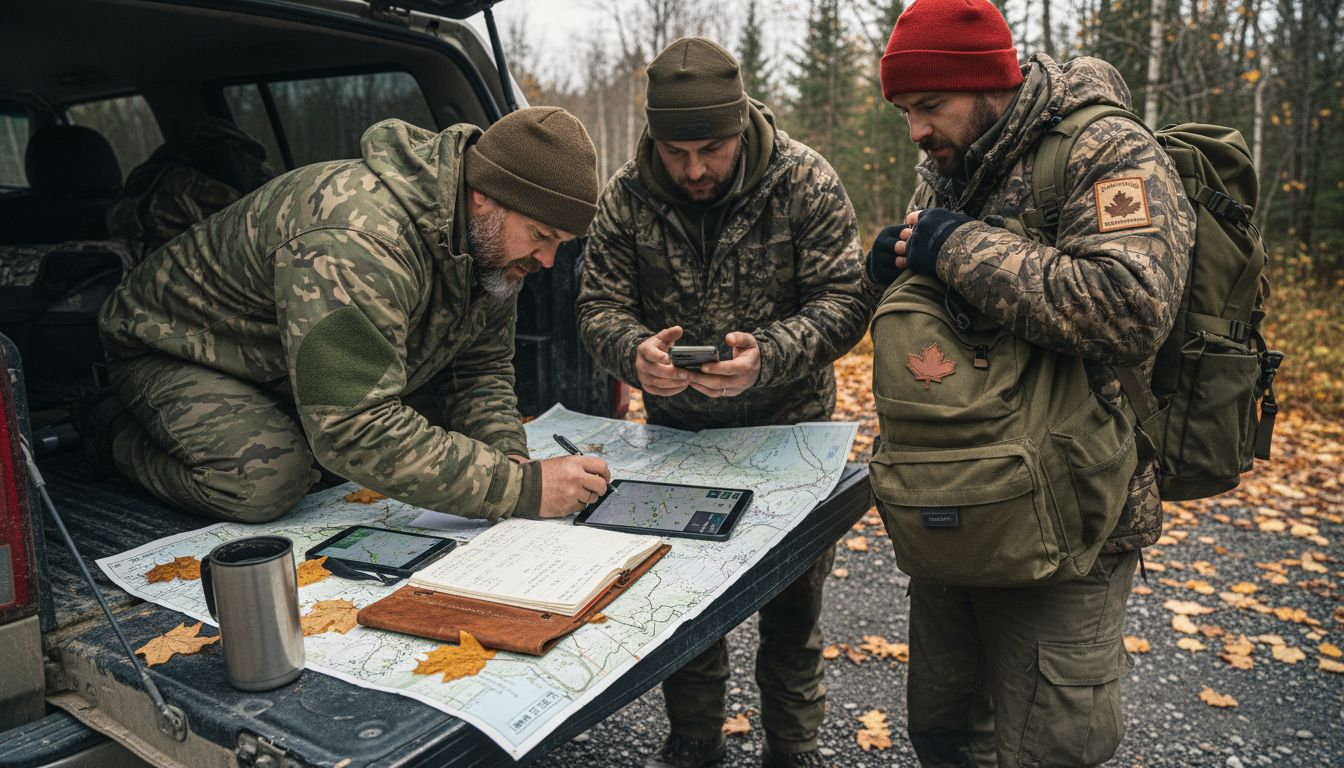
Preparing for a hunting trip in Canada can feel overwhelming with so many provincial rules and requirements to keep track of. Whether you are planning to hunt in Ontario, Alberta, or anywhere else, each province sets out its own licensing steps, approved hunting zones, and season dates. Missing a detail could mean fines or a disappointing trip.
The good news is that you can simplify your preparation and avoid common mistakes by learning a few practical strategies up front. This list gives you the step-by-step guidance you need to hunt legally and confidently, from understanding provincial hunting regulations to making the most of digital mapping tools.
You will discover valuable tips that help you find the right hunting areas, secure your permits, and stay safe and prepared whenever you head outdoors.
Table of Contents
- 1. Know Your Provincial Hunting Regulations
- 2. Use WMU Maps For Legal Hunting Areas
- 3. Plan Hunts By Species And Open Seasons
- 4. Secure Required Licences And Tags Early
- 5. Prepare Gear And Check Equipment
- 6. Scout Locations With Digital Mapping Tools
- 7. Track Your Hunts And Stay Connected
Quick Summary
| Takeaway | Explanation |
|---|---|
| 1. Understand Provincial Regulations | Research and familiarize yourself with hunting regulations specific to your province to ensure legal and safe hunting practices. |
| 2. Review WMU Maps Carefully | Use Wildlife Management Unit maps to identify legal hunting zones, species allowances, and seasonal restrictions within your area. |
| 3. Plan Hunts by Species Seasons | Check the open seasons for each game species to maximize your hunting opportunities while adhering to conservation practices. |
| 4. Secure Licences and Tags Early | Obtain necessary hunting licences and tags well in advance to comply with regulations and ensure participation in hunts. |
| 5. Prepare Gear Thoroughly | Conduct a detailed assessment of your hunting equipment, ensuring all gear is ready and functional for a successful expedition. |
1. Know Your Provincial Hunting Regulations
Understanding provincial hunting regulations is the cornerstone of responsible and legal hunting in Canada. Each province has unique rules that govern everything from licensing requirements to specific game management practices, making thorough preparation absolutely critical for hunters.
Hunting in Canada requires more than just enthusiasm and skill. Provincial regulations define precisely what species you can hunt, when you can hunt them, and under what specific conditions. These rules are designed to protect wildlife populations, ensure hunter safety, and maintain sustainable ecological balance.
The Ontario Hunting Regulations Summary provides a comprehensive overview of legal requirements that hunters must understand before entering the field. This includes critical details about Wildlife Management Units (WMUs), mandatory reporting procedures, controlled hunt applications, and specific licensing requirements.
Key elements hunters must research include season dates, bag limits, hunting methods permitted for specific game species, and mandatory safety equipment. Different provinces may have varying regulations for big game like moose and deer, small game like rabbits, and migratory birds.
Additionally, hunters must verify their specific WMU, as hunting permissions can vary dramatically between different geographic zones within the same province. Some areas might have specific restrictions on hunting times, equipment types, or require special permits.
Pro tip: Always download the most recent digital version of your provincial hunting regulations and save an offline copy on your mobile device to reference in areas with limited cell service.
2. Use WMU Maps for Legal Hunting Areas
Wildlife Management Unit (WMU) maps are critical navigational tools for Canadian hunters, offering precise boundaries and legal hunting zones across different provinces. Understanding these maps can mean the difference between a successful legal hunt and an unintentional regulatory violation.
Each province uses WMUs to systematically divide hunting territories, helping wildlife conservation efforts and managing game populations effectively. These mapped zones define specific areas where particular hunting regulations apply, including species allowances, seasonal restrictions, and permitted hunting methods.
Provincial Wildlife Management Unit maps contain critical information for hunters. They clearly delineate public and private lands, highlight restricted areas, and provide essential geographic context for hunting permissions. Hunters must carefully review these maps to understand exactly where they can legally hunt.
When using WMU maps, pay close attention to boundary lines, colour coded zones, and specific notations about land use restrictions. Some areas might allow general hunting, while others could be designated for specific game species or have special conservation requirements.
Modern digital mapping tools have made WMU navigation significantly easier. Many hunters now use GPS enabled devices and mobile applications that overlay WMU boundaries directly onto satellite imagery, allowing real time tracking and verification of hunting zones.
Pro tip: Always download and save offline digital WMU maps before entering remote hunting areas to ensure you have access to navigation information even without cellular service.
3. Plan Hunts by Species and Open Seasons
Successful hunting in Canada requires meticulous planning around species specific open seasons and provincial regulations. Each game species has unique hunting windows that are carefully designed to protect wildlife populations and ensure sustainable hunting practices.
Canadian hunters must understand that open seasons vary dramatically by species, region, and Wildlife Management Unit. Ontario Hunting Regulations provide comprehensive schedules detailing precise dates for different game animals such as whitetail deer, moose, bear, wild turkey, and waterfowl.
Some key considerations when planning your hunt include understanding the specific time frames for each species. Big game like moose typically have shorter and more restricted seasons compared to smaller game animals. Provincial wildlife management agencies determine these seasons based on population health, breeding cycles, and conservation objectives.
Hunters should review season dates well in advance and consider factors beyond just the calendar. Migration patterns, breeding seasons, and local ecological conditions can significantly impact hunting success. Some species have different season dates for different hunting methods such as bow hunting versus firearm hunting.
Additionally, hunters must pay attention to bag limits and special restrictions that might apply in specific Wildlife Management Units. These can include gender specific hunting permits for certain species or limitations on the number of animals that can be harvested in a given season.
Pro tip: Create a comprehensive hunting calendar that cross references species seasons with your preferred WMUs to maximise your hunting opportunities and ensure full regulatory compliance.
4. Secure Required Licences and Tags Early
Successful hunting in Canada begins long before you step into the wilderness obtaining the proper hunting licences and tags. Procuring your documentation early is not just recommended its absolutely essential for legal and responsible hunting.
Each Canadian province has specific licensing requirements that hunters must navigate carefully. In Ontario this means completing the Hunter Education Program, acquiring an Outdoors Card, and purchasing species specific permits. Different game animals require different tags and permits making advanced planning critical.
Licensing processes vary by province but generally involve proving your hunting competency through education courses and demonstrating knowledge of wildlife conservation principles. Some controlled hunts and big game species have limited tag allocations which means early application dramatically increases your chances of securing the right permits.
Hunters should understand that licence requirements extend beyond simple documentation. They represent a commitment to responsible wildlife management and conservation efforts. Each tag represents carefully managed population control designed to maintain healthy ecological balance across Canadian wilderness areas.
The digital age has simplified licence procurement with online applications and instant verification systems. However this convenience should not replace thorough preparation and understanding of specific provincial regulations that govern hunting activities.
Pro tip: Create a digital and physical backup of all your hunting documentation and set calendar reminders at least three months before hunting season to ensure you have all necessary permits and tags.
5. Prepare Gear and Check Equipment
Preparing your hunting gear is far more than a simple checklist it is a critical ritual of readiness that can determine the success and safety of your hunting expedition. Thorough equipment preparation ensures you are ready for whatever challenges the Canadian wilderness might present.
Canadian hunters must focus on comprehensive gear assessment, which includes multiple categories of essential equipment. Hunting preparation involves meticulously checking firearms, ammunition, clothing, navigation tools, communication devices, and survival essentials.
Firearm maintenance is paramount. This means cleaning your weapon thoroughly, checking its mechanical functionality, verifying scope alignment, and ensuring all components are in perfect working order. For archery hunters, this translates to inspecting bow strings, checking arrow straightness, and testing broadhead sharpness.
Clothing selection goes beyond simple comfort. Your hunting attire must provide camouflage, weather protection, and noise reduction. Layering is crucial in Canadian environments where temperatures can fluctuate dramatically. Consider moisture wicking base layers, insulating mid layers, and waterproof outer shells that allow silent movement.
Safety equipment deserves special attention. This includes first aid kits, emergency communication devices, survival blankets, navigation tools like GPS and compass, and appropriate signalling equipment. Always pack redundant communication methods in case primary devices fail in remote areas.
Pro tip: Create a standardized gear checklist and conduct a full equipment test run at least two weeks before your hunting trip to identify and replace any compromised or outdated gear.
6. Scout Locations with Digital Mapping Tools
Modern hunting demands more than traditional scouting techniques digital mapping tools have revolutionized how Canadian hunters prepare for their expeditions. Technology now allows hunters to analyse terrain, identify potential hunting zones, and plan routes with unprecedented precision.
Digital mapping provides hunters with incredible advantages that were impossible just a decade ago. Satellite imagery, topographical data, and precise geographical information can be accessed through sophisticated hunting companion applications that overlay wildlife management units, terrain features, and potential game movement corridors.
Most advanced mapping tools now integrate multiple layers of geographical information. These include elevation profiles, vegetation density, water source locations, and historical game movement patterns. Hunters can mark potential stand locations, track access routes, and analyse landscape features that might influence animal behaviour.
Mobile applications with offline map capabilities are particularly valuable for hunters exploring remote Canadian wilderness. These tools allow precise location tracking, waypoint marking, and route planning even in areas with limited cellular coverage. Hunters can download comprehensive maps before entering the field ensuring navigation reliability.
Advanced digital mapping also helps hunters understand complex terrain interactions. By analysing slope gradients, vegetation types, and landscape connectivity, hunters can predict likely game movement patterns and identify high probability hunting zones that might otherwise remain unnoticed.
Pro tip: Practice using your digital mapping tools weeks before your hunting trip and download offline map packages for your specific Wildlife Management Unit to ensure comprehensive geographical preparation.
7. Track Your Hunts and Stay Connected
Staying connected during hunting expeditions is more than a convenience it is a critical safety requirement for Canadian hunters venturing into remote wilderness areas. Modern technology offers unprecedented opportunities for tracking hunts, sharing experiences, and maintaining critical communication links.
Hunting communities have evolved dramatically with digital connectivity, enabling real time information sharing and enhanced safety protocols. Community discussion platforms now allow hunters to exchange valuable insights about local conditions, wildlife movements, and potential challenges in specific hunting zones.
Digital tracking tools provide hunters with multiple layers of communication and safety support. GPS enabled devices can share location information with emergency contacts, while mobile applications allow hunters to log hunting progress, mark successful game locations, and record environmental observations that could benefit future expeditions.
Effective hunt tracking involves more than just location sharing. Sophisticated hunting apps now integrate features like weather monitoring, terrain analysis, game movement prediction, and communication channels that work in areas with limited cellular coverage. These tools transform traditional hunting practices by providing real time data and connectivity options.
Hunters should establish clear communication protocols before entering remote areas. This includes sharing detailed trip plans with trusted contacts, carrying multiple communication devices, and understanding the capabilities and limitations of different tracking technologies in wilderness environments.
Pro tip: Invest in a satellite communication device with emergency beacon functionality and ensure at least two trusted contacts have your detailed hunting location and expected return timeline.
Below is a comprehensive table summarizing the key points, strategies, and considerations for responsible and effective hunting in Canada as discussed throughout the article.
| Key Aspect | Details and Guidelines | Benefits and Impacts |
|---|---|---|
| Provincial Regulations | Understand and comply with provincial laws to ensure legal and ethical practices. | Promotes wildlife conservation, safety, and sustainable hunting habits. |
| Wildlife Management Units (WMUs) | Use detailed WMU maps to identify legal hunting areas and specific restrictions. | Assists in planning hunts effectively and avoiding legal violations. |
| Planning by Species | Align hunting activities with species specific open seasons and guidelines. | Ensures regulatory compliance and maximizes hunting success. |
| Licensing and Tags | Acquire proper licences and permits ahead of time through provincial systems. | Guarantees participation in designated hunts and adherence to regulations. |
| Equipment Preparation | Conduct thorough checks of firearms, clothing, and survival tools. | Ensures preparedness, enhances safety, and improves the hunting experience. |
| Digital Mapping Tools | Utilize modern applications for terrain analysis and WMU overlay. | Facilitates effective navigation and strategic planning. |
| Tracking and Connectivity | Use GPS devices and communication tools for safety and tracking progress. | Improves safety measures and enables valuable data collection. |
The table provides a structured overview for Canadian hunters to effectively prepare, comply, and succeed in their hunting activities.
Elevate Your Canadian Hunting Experience with HuntScout.app
Planning your hunting season with precision means mastering regulations, navigating Wildlife Management Units, and tracking open seasons effectively. The challenges of understanding provincial rules, managing licences, and scouting locations can feel overwhelming. HuntScout.app solves these critical pain points by offering real-time regulation updates, interactive WMU maps, and a tailored season tracker all in one powerful, easy-to-use platform designed specifically for Canadian hunters.
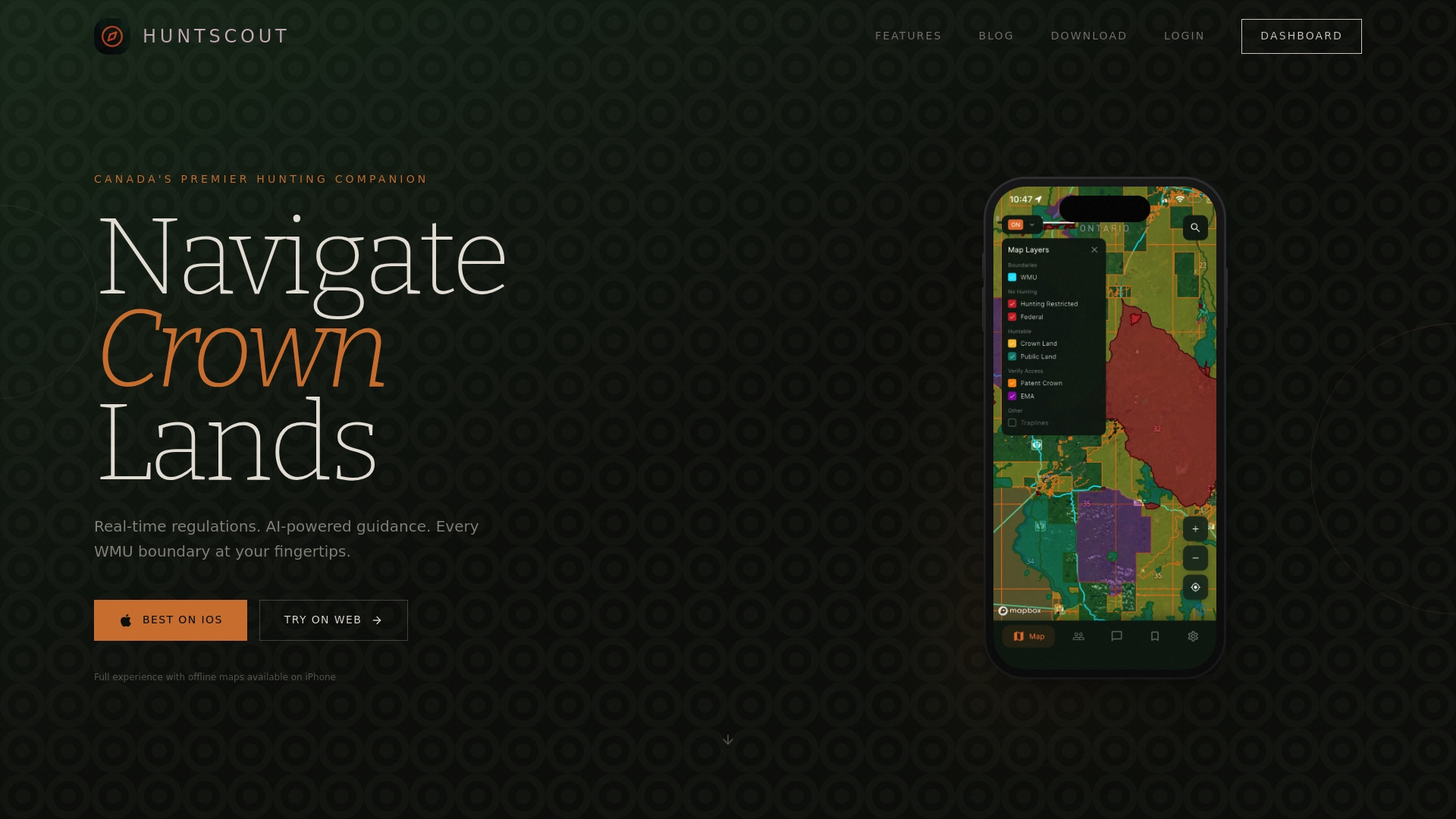
Don’t leave your next hunt to chance. Use HuntScout.app to access up-to-date provincial regulations, mark your favourite hunting spots, and get AI-powered answers to all your hunting questions instantly. Start planning smarter and safer today by visiting https://huntscout.app and see why thousands of Canadian hunters trust this all-in-one hunting companion. Your next great hunt deserves the confidence and clarity only HuntScout can provide.
Frequently Asked Questions
How can I stay updated on provincial hunting regulations?
Understand the regulations for your hunting area by regularly checking for updates on provincial hunting regulation websites. Download the latest regulations summary and saved it offline to ensure you have access even without cell service.
What should I include in my hunting calendar?
Create a hunting calendar that details open seasons for various game species alongside your preferred Wildlife Management Units. Cross-reference species seasons to maximize your opportunities for compliant hunting.
How can I make sure my hunting gear is ready?
Thoroughly inspect and test all your hunting gear at least two weeks prior to your trip. This includes checking the functionality of your firearm, ensuring your clothing is appropriate for the weather, and verifying that your safety equipment is complete.
What steps should I take when scouting locations for hunting?
Utilize digital mapping tools to analyze terrain and identify potential hunting zones, ensuring you understand Wildlife Management Unit boundaries. Mark waypoints and plan routes in advance for effective navigation in the field.
How can I improve communication during my hunting expeditions?
Establish clear communication protocols before your trip, including sharing your detailed hunting plans with trusted contacts. Consider using GPS-enabled devices and satellite communication tools to maintain connectivity and enhance safety in remote areas.