Hunting Licensing in Canada: Why Compliance Matters

Sorting through complicated hunting licence rules can leave new and intermediate hunters in Ontario and Alberta feeling uncertain about where to start and what’s actually required. Getting clear on licensing is more than just following paperwork—it’s key for safe, legal hunting and upholding the traditions that matter to Canadian hunters. This overview tackles common myths, lays out the key distinctions between resident and non-resident rules, and points you toward the exact steps needed for compliant, stress-free hunting.
Table of Contents
- Defining Hunting Licensing And Common Myths
- Resident Versus Non-Resident Licences Across Canada
- Key Hunting Licence Requirements And How To Qualify
- Provincial Laws: Ontario And Alberta Compared
- Hunter Responsibilities And Legal Consequences
- Common Licensing Mistakes And How To Avoid Them
Key Takeaways
| Point | Details |
|---|---|
| Hunting Licensing Complexity | Hunting licences in Canada are tailored to specific provinces and regulations, making understanding local laws essential for hunters. |
| Resident vs. Non-Resident Differences | Non-resident hunters face stricter requirements and regulations, including potential guide requirements and higher fees. |
| Hunter Responsibilities | Hunters must carry valid documentation, adhere to safety regulations, and comply with species-specific rules to avoid legal consequences. |
| Common Licensing Mistakes | Failing to check local licence requirements and neglecting education courses can lead to significant penalties and legal issues for hunters. |
Defining Hunting Licensing and Common Myths
Hunting licensing in Canada represents a complex regulatory system designed to manage wildlife populations, ensure hunter safety, and maintain ecological balance. These licenses are not merely bureaucratic documents but critical tools for conservation and responsible outdoor recreation. Every hunter in Canada must understand the nuanced requirements that govern hunting permissions across different provinces and territories.
Canadian hunting licenses are legally mandated permits that grant individuals permission to hunt specific wildlife species during designated seasons. They serve multiple purposes beyond simple authorization: tracking hunter participation, managing wildlife populations, generating conservation funding, and ensuring hunters understand safety protocols. Contrary to popular misconceptions, licenses are not uniform across Canada but vary significantly by province, species, hunting method, and hunter experience level.
Some persistent myths surrounding hunting licensing require clarification. One common misunderstanding is that all hunting licenses are identical or universally applicable. In reality, licenses are highly specialized, with specific constitutional considerations for indigenous hunters that can differ from standard regulations. Another widespread myth suggests licensing is purely administrative, when in fact these permits play a crucial role in wildlife management, habitat protection, and sustainable hunting practices.
The licensing process involves more than simply purchasing a permit. Hunters must typically complete mandatory safety courses, demonstrate knowledge of local wildlife regulations, and understand ethical hunting practices. Each province maintains its own specific requirements, making it essential for hunters to research and comply with local guidelines.
Pro tip: Before purchasing any hunting license, contact your provincial wildlife management office to confirm the most current regulations and specific requirements for your hunting region.
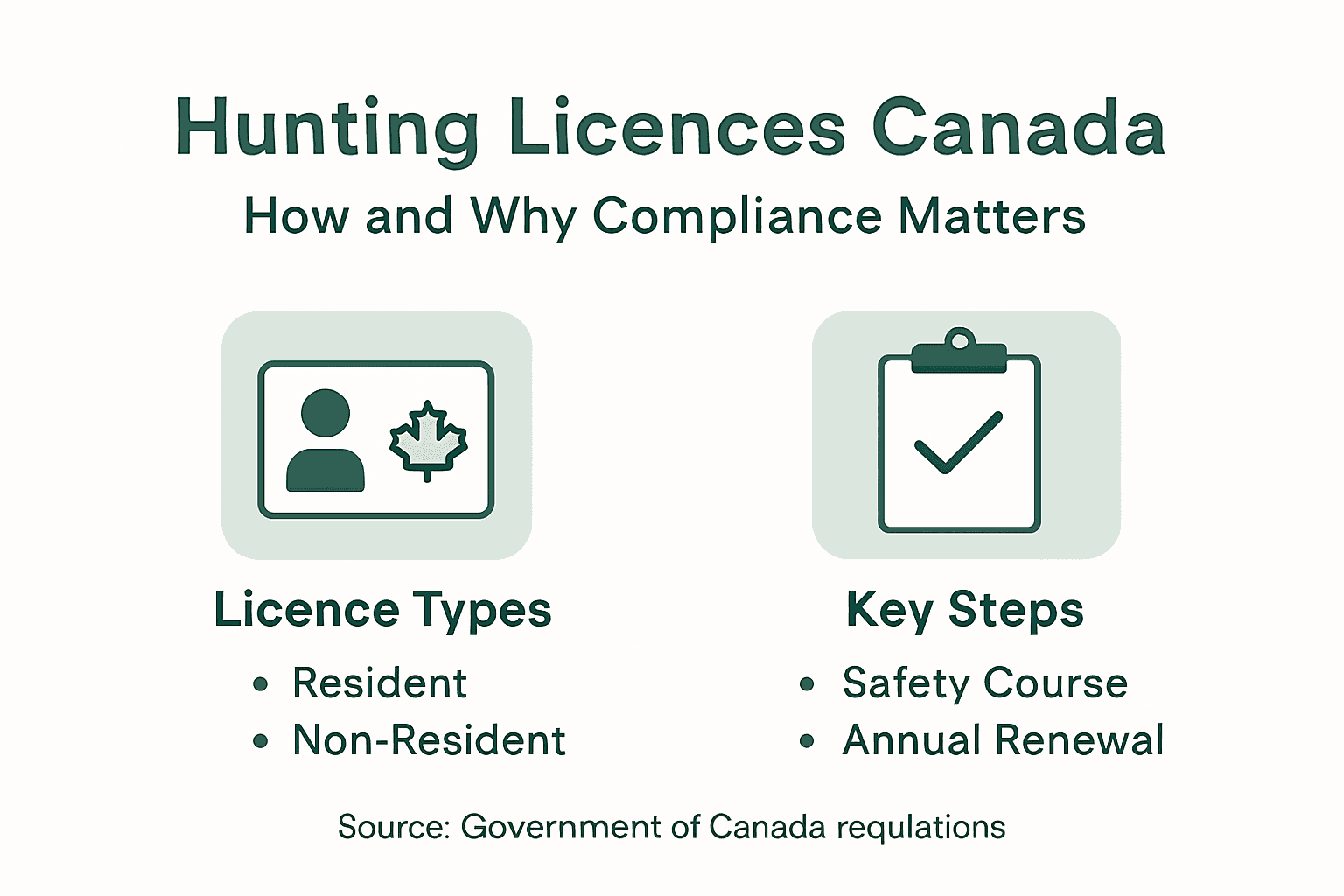
Resident Versus Non-Resident Licences Across Canada
Hunting licences in Canada reflect a complex system of regulations that distinctly differentiate between resident and non-resident hunters. These differences extend far beyond mere pricing structures, encompassing eligibility requirements, hunting privileges, and regional variations that can significantly impact a hunter’s experience and legal standing in different provinces.
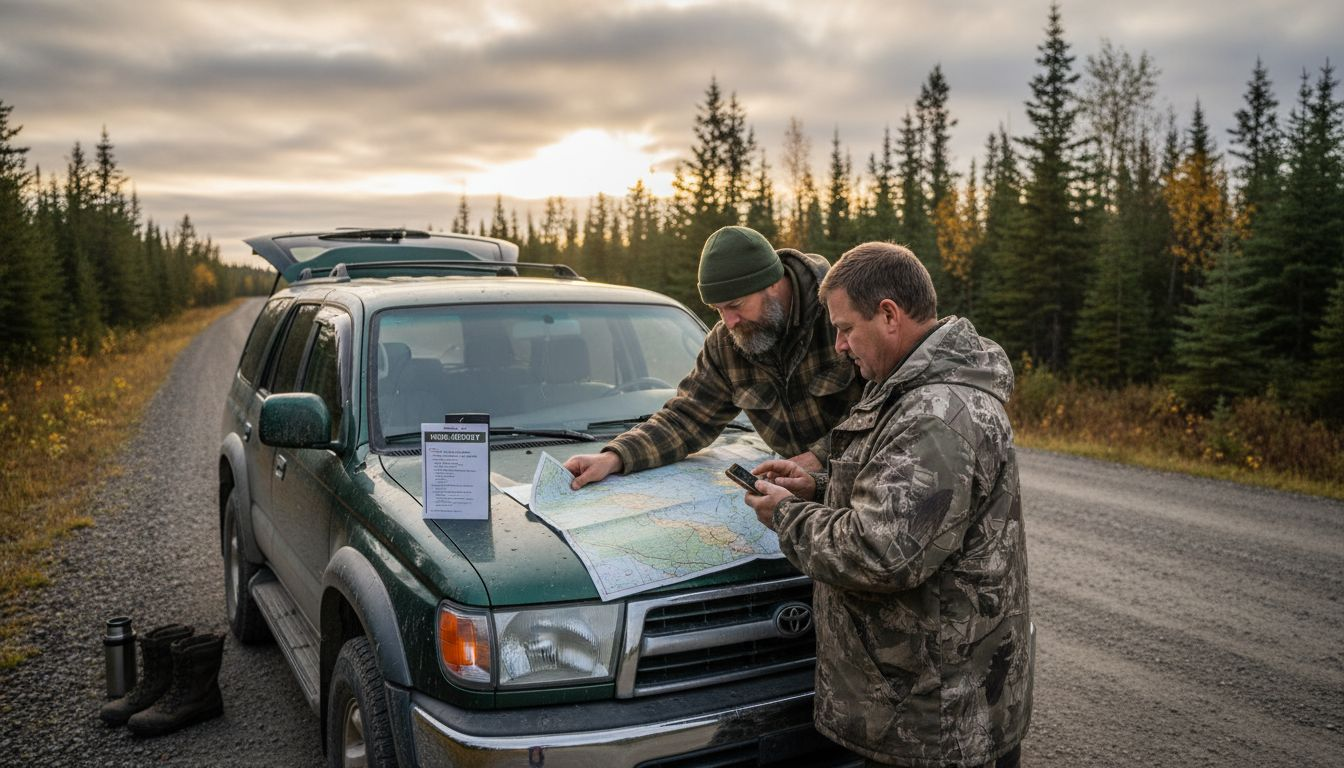
Resident hunters typically enjoy more flexible licensing options and reduced fees compared to non-residents. In British Columbia, for instance, non-resident hunting requirements involve specific credentials and mandatory guide accompaniment for big game hunting. The provincial differences are stark: what might be permissible in one region could be strictly prohibited in another. Non-resident hunters must navigate a intricate landscape of provincial regulations, often requiring additional documentation, higher-cost permits, and sometimes mandatory professional guide services.
The licensing process for non-residents is particularly rigorous. Unlike residents who may have long-standing familiarity with local wildlife management practices, non-resident hunters must demonstrate comprehensive understanding of regional hunting regulations. Ontario’s licensing system for non-residents, for example, mandates specific hunter education certifications and requires detailed documentation proving hunting competency. These stringent requirements aim to ensure environmental conservation, hunter safety, and responsible wildlife management.
Key distinctions between resident and non-resident licences typically include:- Significantly different pricing structures- Varied quota allocations for specific game species- Additional documentation requirements for non-residents- Potential restrictions on hunting methods and locations- Mandatory hunter education for out-of-province hunters
Pro tip: Always contact the specific provincial wildlife management office well in advance of your hunting trip to confirm the most current non-resident licensing requirements and potential restrictions.
Here’s a quick comparison of resident versus non-resident hunting licences in major Canadian provinces:
| Province | Resident Licence Key Feature | Non-Resident Licence Key Requirement | Unique Restriction |
|---|---|---|---|
| Ontario | Lower annual fee | Out-of-province hunter safety certificate | Assigned wildlife management units |
| British Columbia | Flexible licence options | Mandatory guide for big game | Limited hunting zones |
| Alberta | No guide required for residents | Non-residents need hunter host or outfitter | Strict weapon restrictions |
Key Hunting Licence Requirements and How to Qualify
Obtaining a hunting licence in Canada involves a comprehensive process designed to ensure hunter safety, conservation awareness, and responsible wildlife management. The requirements are carefully structured to protect both hunters and wildlife populations while maintaining sustainable hunting practices across different provinces and territories.
In Ontario, the licensing process is particularly structured. Hunting licence requirements for residents include specific age restrictions, mandatory hunter education, and possession of an Outdoors Card. Prospective hunters must complete a certified hunter education course, which covers critical skills including firearm safety, wildlife identification, conservation principles, and ethical hunting practices. These educational requirements are not simply bureaucratic hurdles but essential training that prepares hunters to engage responsibly with Canada’s diverse ecosystems.
British Columbia offers another exemplary model of comprehensive licensing procedures. The province’s system categorizes hunting licences into multiple types including resident, non-resident, youth, and initiation hunter classifications. Each category has unique qualifications and restrictions designed to accommodate different hunter experience levels and backgrounds. Key requirements typically include:
- Minimum age restrictions (usually 12-16 years old)
- Successful completion of hunter safety education
- Proof of residency or citizenship status
- Species-specific hunting tags
- Valid firearms possession certification
- Annual medical fitness declaration
Pro tip: Contact your provincial wildlife management office at least three months before hunting season to confirm the most current licensing requirements and ensure a smooth application process.
Provincial Laws: Ontario and Alberta Compared
Hunting regulations in Canada demonstrate significant regional variations, with Ontario and Alberta representing two distinct approaches to wildlife management and hunter governance. Each province has developed unique legislative frameworks that reflect their specific ecological landscapes, wildlife populations, and conservation strategies.
Ontario’s hunting regulations provide comprehensive guidelines for hunters, emphasizing strict safety protocols and conservation-minded practices. The province mandates specific requirements such as mandatory hunter orange clothing, detailed vehicle and dog usage restrictions, and stringent enforcement mechanisms. These regulations are designed to balance hunter accessibility with wildlife preservation, creating a structured environment that prioritizes both human safety and ecological sustainability.
Alberta takes a slightly different approach to hunting legislation. The province’s regulatory framework focuses on precise game management units and weapon restrictions, offering hunters a nuanced set of guidelines that adapt to the region’s diverse terrain and wildlife populations. Key differences between the two provinces include:
- Variation in mandatory hunter education requirements
- Different game management unit boundaries
- Unique ammunition and weapon restrictions
- Distinct seasonal hunting periods
- Divergent residency qualification standards
- Contrasting conservation enforcement strategies
These provincial distinctions underscore the importance of hunters thoroughly understanding local regulations before planning any hunting expedition. While both Ontario and Alberta share a commitment to responsible wildlife management, the specific implementation of hunting laws reveals the complex, region-specific approach to conservation in Canada.
Pro tip: Always download and review the most recent official provincial hunting regulations PDF before your hunting season to ensure full compliance with current local laws.
Compare how Ontario and Alberta approach hunting safety and conservation enforcement:
| Aspect | Ontario Approach | Alberta Approach | Notable Difference |
|---|---|---|---|
| Hunter Safety | Mandatory orange clothing | Specific firearm classes | Focuses: attire vs. firearms |
| Conservation Enforcement | Regular field checks | Region-based unit monitoring | Enforcement style regionalized |
| Seasonal Limits | Province-wide start/end dates | Game unit-specific periods | Season timing more local in Alberta |
Hunter Responsibilities and Legal Consequences
The legal framework surrounding hunting in Canada extends far beyond simply obtaining a licence. Hunters bear significant responsibilities that directly impact wildlife conservation, public safety, and environmental stewardship. Understanding these obligations is crucial to maintaining the delicate balance between responsible recreational hunting and ecosystem preservation.
Ontario’s Fish and Wildlife Conservation Act establishes comprehensive legal guidelines for hunter conduct, outlining specific responsibilities and potential consequences for non-compliance. These regulations encompass a wide range of requirements, including proper licencing documentation, mandatory safety protocols, and ethical hunting practices. Violations can result in substantial penalties, including monetary fines, potential imprisonment, and the suspension or permanent revocation of hunting privileges.
Hunter responsibilities are multifaceted and include several critical components:
- Carrying valid hunting documentation at all times
- Wearing prescribed safety clothing (hunter orange)
- Proper weapon handling and transportation
- Ethical game harvesting practices
- Reporting hunting activities and game harvests
- Respecting wildlife management unit boundaries
- Proper disposal of animal remains
- Minimizing environmental impact
The legal consequences of non-compliance can be severe. Hunters may face significant financial penalties, ranging from hundreds to thousands of dollars, depending on the nature of the violation. More serious infractions can lead to criminal charges, potential jail time, and permanent loss of hunting privileges. Beyond legal ramifications, such violations can also result in damage to personal reputation and exclusion from hunting communities.
Pro tip: Photograph and digitally backup all hunting documentation before each expedition to ensure you have immediate proof of compliance in case of unexpected regulatory checks.
Common Licensing Mistakes and How to Avoid Them
Navigating the complex landscape of hunting licences can be challenging, with numerous potential pitfalls that can quickly transform an exciting hunting expedition into a legal nightmare. Understanding the most common mistakes and proactively addressing them is crucial for hunters seeking a seamless and compliant hunting experience across Canadian provinces.
Ontario’s hunting regulations highlight several critical licensing errors hunters frequently encounter, which can result in significant legal and financial consequences. These mistakes often stem from misunderstandings about documentation requirements, residency classifications, and specific provincial regulations that vary dramatically across different regions.
The most prevalent licensing mistakes include:
- Failing to carry valid hunting documentation
- Misunderstanding residency classification requirements
- Neglecting to acquire species-specific tags
- Missing mandatory reporting deadlines
- Hunting without completing required education programs
- Assuming licence validity across multiple provinces
- Not verifying seasonal restrictions and game management unit boundaries
- Purchasing incorrect or outdated licence types
Most licensing errors can be preempted through careful preparation and thorough research. Hunters must recognize that each province maintains unique regulatory frameworks, and what constitutes a valid licence in one region might be entirely insufficient in another. Careful attention to detail, proactive communication with provincial wildlife authorities, and maintaining up-to-date documentation are essential strategies for avoiding potential legal complications.
Pro tip: Create a digital folder on your smartphone containing high-resolution scans of all hunting-related documentation, ensuring immediate access during unexpected regulatory checks.
Stay Compliant and Confident with HuntScout
Navigating the complex and varied hunting licence regulations across Canadian provinces can be overwhelming. Between managing specific species tags, understanding residency distinctions, and ensuring you meet mandatory education requirements, hunters face many challenges before even stepping into the field. Your goal is clear: stay fully compliant while enjoying a safe and successful hunting experience.
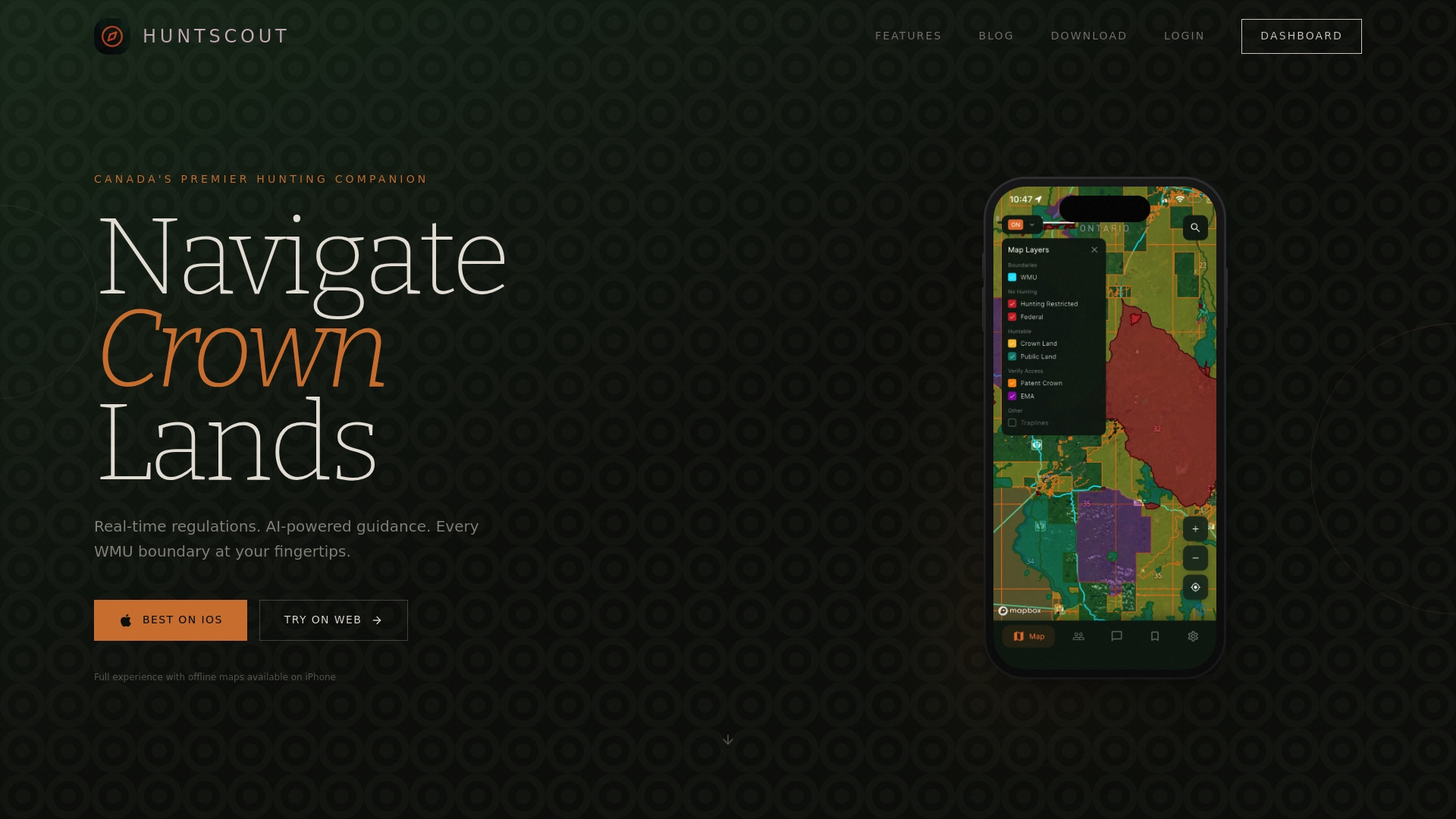
HuntScout.app offers you a powerful solution to these challenges. With real-time regulation updates, AI-powered guidance on hunting licences and techniques, and detailed Wildlife Management Unit maps, you can avoid common licensing mistakes and legal risks discussed in “Hunting Licensing in Canada: Why Compliance Matters.” Access up-to-date provincial laws for Ontario, Alberta, British Columbia, and more directly through the app. Plus, join a growing community of responsible hunters exchanging insights and support. Take control of your hunt today by visiting HuntScout and equip yourself with the ultimate tool to comply with Canadian hunting laws and make every outing count.
Frequently Asked Questions
What are the main purposes of hunting licenses in Canada?
Hunting licenses in Canada serve several critical roles, including tracking hunter participation, managing wildlife populations, generating conservation funding, and ensuring hunters are educated on safety protocols.
What common myths exist about hunting licenses in Canada?
A common myth is that all hunting licenses are identical across Canada, while in reality, they vary by province, hunting method, and species. Another misconception is that licensing is merely administrative when they are vital for wildlife management and conservation.
What are the key requirements to obtain a hunting license?
To obtain a hunting license, individuals typically must complete mandatory safety courses, demonstrate an understanding of local wildlife regulations, and adhere to ethical hunting standards, with specific requirements varying by province.
What are common mistakes hunters make regarding licensing?
Common mistakes include failing to carry valid hunting documentation, misunderstanding residency classification requirements, neglecting to obtain species-specific tags, and not verifying seasonal restrictions and game management unit boundaries.