Picture this: you’re breathing in crisp mountain air, and the sound of a distant bull elk bugle cuts through the silence of the Rockies. An elk hunt in Alberta is one of the most incredible adventures you can have, but pulling it off requires a solid game plan. This guide is your complete roadmap to making that unforgettable hunt a reality.
Why Alberta Is a Top-Tier Elk Hunting Destination
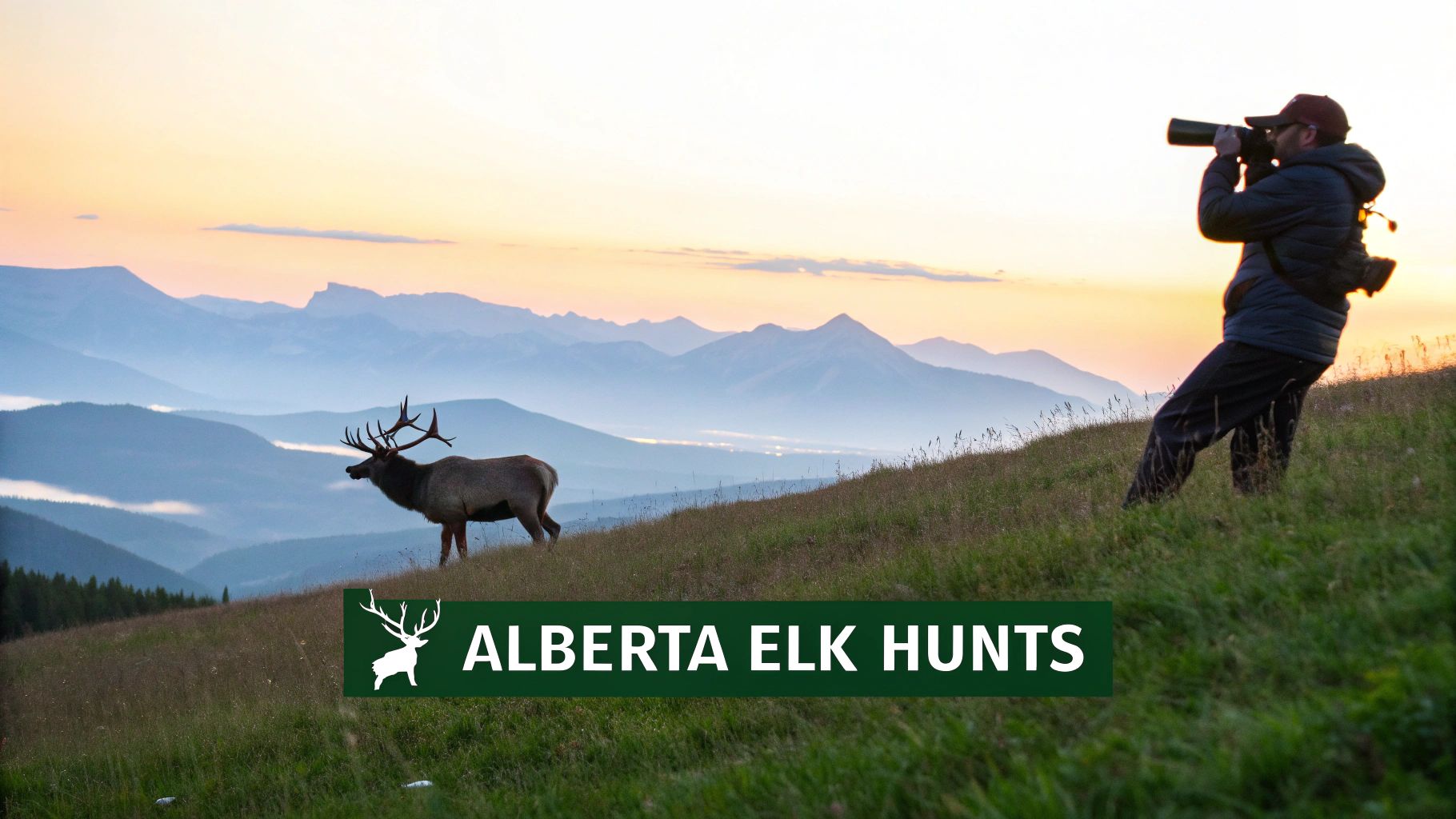
Alberta has earned its reputation as a world-class spot for elk hunters, and for good reason. It’s a perfect mix of stunning scenery and healthy, well-managed elk herds. The province’s terrain is incredibly diverse, ranging from the rugged peaks of the Rocky Mountains to rolling foothills and the thick bush of the boreal forest, creating a variety of challenging habitats for these massive animals.
This variety means there's a hunt for every style. Whether you’re after a gruelling backcountry alpine adventure or a more strategic chess match in the timber, you'll find it here. Alberta’s serious commitment to conservation ensures the elk populations are strong and sustainable, which means better hunting opportunities for everyone.
A Growing Passion for Elk
The buzz around alberta elk hunts isn't just talk—the numbers back it up. In 2023, the province had 120,212 adult resident hunters, and 49,301 of them held elk-specific tags. That’s a real jump from 2019, when there were 98,300 hunters and 43,865 tags. This trend shows just how much the province's reputation has grown, thanks in large part to its dedicated hunting community. If you want to dive deeper, you can check out the official licence statistics for a full breakdown.
At its core, an Alberta elk hunt is an immersive wilderness experience. It tests your skills, patience, and physical limits while rewarding you with unparalleled scenery and the chance to pursue one of North America's most iconic big-game animals.
Planning a hunt like this can feel like a massive task, but this guide breaks it down into clear, manageable steps. We’ll cover everything from decoding Alberta’s complex regulations and finding good public land to making the key decisions that ultimately lead to a filled tag. The goal is to give you practical advice you can actually use, whether you’re a seasoned veteran or planning your very first western hunt.
To get started, the table below gives you a quick snapshot of the key stages we'll cover, acting as your high-level checklist.
Alberta Elk Hunt at a Glance
| Planning Stage | Key Considerations | HuntScout Feature |
|---|---|---|
| Regulations & Tags | General vs. Special Licence draw, season dates, legal requirements | Season Dates & Regulation Summaries |
| Location Scouting | Understanding WMUs, identifying Crown Land, e-scouting | WMU Boundary Layers & Land Ownership Maps |
| Hunt Style | Pros and cons of guided vs. DIY approaches, budget, experience | AI Assistant for Regulation Questions |
| Gear & Tactics | Equipment for specific terrains, calling, spot-and-stalk methods | Offline Maps & Waypoint Saving |
| Final Preparation | Travel logistics, physical conditioning, meat care, safety | Building Your Personal Hunt Database |
With this framework in mind, let’s get into the details that will set you up for success.
Getting to Grips with Alberta's Elk Seasons and Tags
Before you can even dream of hearing a bull bugle on a frosty morning, you’ve got to tackle the paperwork. I know, it's not the exciting part, but think of Alberta’s hunting regulations less like a rulebook and more like the strategy guide to a very rewarding game. Nailing this part first saves you from headaches, fines, and a hunt that’s over before it even starts.
Everything boils down to how you get your elk tag, and in Alberta, there are two main paths: the General Licence and the Special Licence. Figuring out which one fits your plan is the very first step.
General Licence vs. Special Licence Hunts
A General Licence is the simplest way to get in the game. For certain Wildlife Management Units (WMUs), you can just buy one online or over the counter. This licence usually gives you a shot at a six-point or larger bull, though the specifics can change depending on the zone. It’s the go-to for hunters who want flexibility and the freedom to explore different general zones.
The Special Licence, on the other hand, is the ticket to Alberta's most sought-after hunts. These are tags for very specific WMUs, seasons, and types of elk (like a cow or an any-bull tag) that are handed out through a lottery, better known as the draw system. This is how the province manages hunting pressure in areas that either have sensitive elk herds or are known for producing world-class bulls.
Think of the draw system like a priority line for a hot new restaurant. The longer you've been waiting in line (i.e., the more priority points you have), the better your chance of getting a prime table (a coveted tag).
To get into the draw, you'll need to put in an application on the official AlbertaRELM site, with the deadline typically falling in mid-June. Every year you apply for a specific elk draw and don't get picked, you get a priority point for that draw code. These points stack up year after year, boosting your odds for the future. For some of the top-tier elk hunts in the province, it’s not uncommon to need seven or more priority points to even have a chance.
How the Draw and Priority Points Really Work
This isn't a game of pure luck; it's a weighted system. When the draw happens, the system looks at applicants with the most priority points first and works its way down. So, if there are 20 tags for a WMU and 25 hunters with 8 priority points apply, only 20 of those hunters will get a tag. Anyone with 7 points or fewer for that draw code is out of luck for that year.
This is where strategy comes in. You have to look at past draw summaries—the data is all publicly available—to see what it took to draw your target tag in previous years. This helps you decide whether you want to "build points" for a future dream hunt or "spend" them on a tag you can likely get this season.
- Building Points: This is when you apply for a hunt that you know is a long shot, like one that takes 10+ points when you only have 2. You won't get drawn, but you'll get another point to add to your total for next year.
- Spending Points: You have 2 or 3 points, and you apply for a hunt that only took 2 points to draw last year. Your odds of pulling that tag are pretty high.
Why Season Dates Vary So Much by WMU
One thing that trips up a lot of hunters is just how much the season dates can vary. The archery season in one WMU might kick off in late August, while the unit right next door doesn't open until mid-September. Rifle seasons are the same—they can range from early September hunts in some of the primitive weapon zones all the way to bitter cold, late-season opportunities in November.
These differences are all tied to the specific wildlife management goals for each individual WMU. An area with a fragile elk population might have a very short rifle season or be archery-only to keep the harvest numbers down. Because of this, you absolutely have to check the regulations for the exact WMU you intend to hunt. The best way to do this is to check Alberta's hunting season dates online, where everything is laid out clearly. Getting these dates right isn’t just a good idea—it’s the law.
Decoding WMUs and Mastering Crown Land Access
So, you’ve got a handle on the seasons and tags. Now for the million-dollar question: where do you actually go? For many hunters planning Alberta elk hunts, this is the single biggest hurdle, and the answer comes down to two things that define almost all hunting here: Wildlife Management Units (WMUs) and Crown Land.
Think of WMUs as the rulebook for specific zones on the map. The government has carved the entire province into these units to manage wildlife populations effectively. Every regulation—from when you can hunt to what kind of elk you can take—is tied directly to the WMU you're standing in. They aren't just lines on a map; they tell you how to hunt legally on that specific piece of ground.
The Role of Wildlife Management Units
A common mistake for new hunters is just looking for a WMU with a pile of elk. While that's a good start, it’s only half the story. A unit might be crawling with elk, but if it’s 99% private land with no access, it’s completely useless for a public land hunt. This is exactly why a good digital mapping tool has gone from a nice-to-have to an absolute necessity for planning a successful hunt.
The process of getting your license, whether through a general tag or a special draw, ultimately funnels down to the rules of a specific WMU. It all ties together.
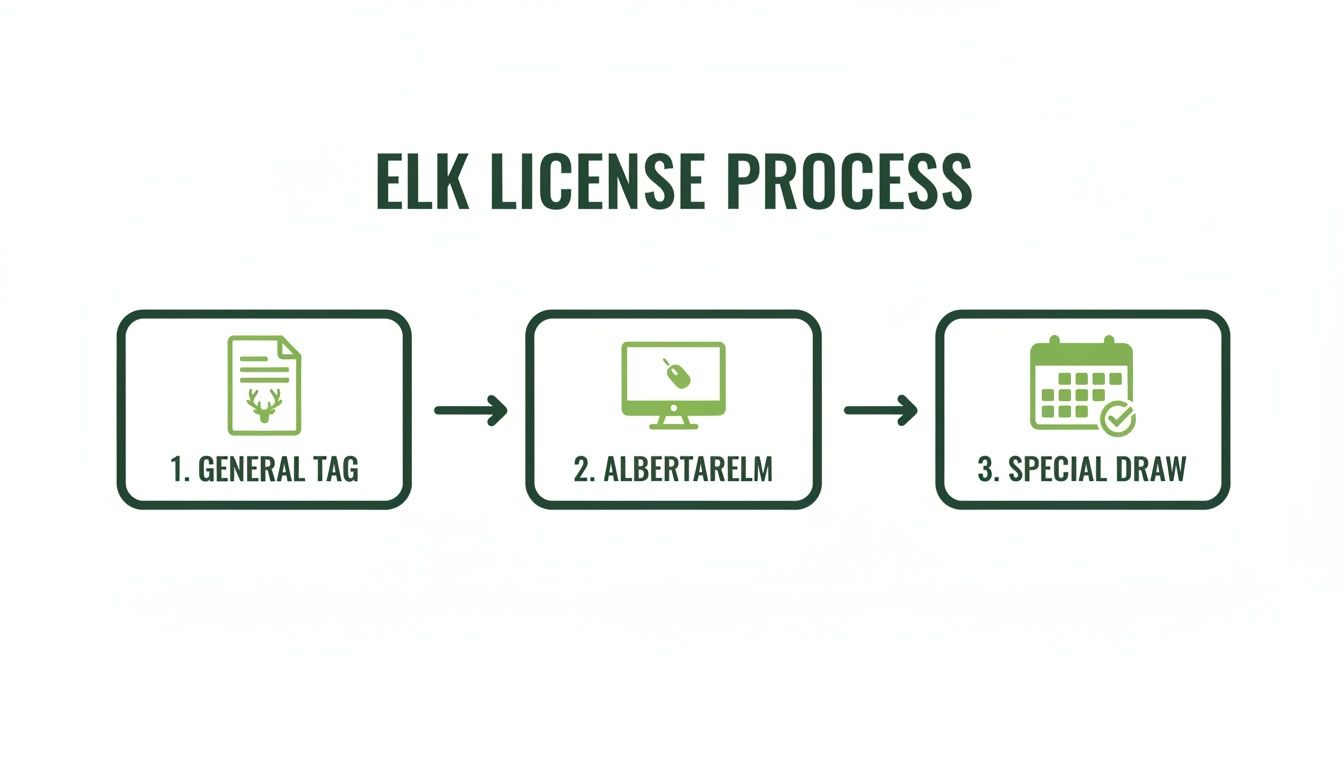
As you can see, no matter how you get your tag, your entire hunt is defined by the specific regulations within your chosen WMU.
Mastering Crown Land for Your Elk Hunt
Crown Land is the public land available to everyone, and it's the heart and soul of any DIY elk hunt in Alberta. But here's the catch: not all Crown Land is the same. Knowing the different types and their specific access rules is what keeps you out of trouble and helps you find those hidden-gem spots.
You'll generally run into three main types of land:
- Green Area (Public Land): This is the classic public land most people picture, covering the vast forested regions in the foothills and northern Alberta. Access is generally open for hunting, but always double-check local restrictions, especially regarding vehicle use on trails.
- White Area (Primarily Private Land): These zones are dominated by privately owned farmland and ranches. While you can find pockets of public land here, they are often smaller and can be trickier to access.
- Agricultural Lease Land: This is Crown Land that the government leases to ranchers for grazing cattle. You can typically access this land on foot without asking for permission, but you can't drive on it or mess with any livestock operations. The golden rule: leave every gate exactly as you found it.
The most important thing to remember is to never assume access. Always use a reliable mapping tool that clearly shows the different land types. Trespassing is a serious offence that can bring your hunt to an immediate and costly end.
Modern mapping apps make this simple. You can see WMU boundaries layered right over satellite imagery, instantly identifying which zone you’re in and whether the land is public or private. It takes all the guesswork out of knowing where you can and can't legally hunt.
Bringing It All Together With Digital Scouting
This is where planning from your couch, or "e-scouting," really pays off. Let's look at a real-world example. Research in the Ya Ha Tinda region found that over 90% of bull elk mortality was due to human hunting. The same study showed that the bulls who migrated to better summer forage grew larger antlers.
For a savvy hunter, that information is pure gold. Using a tool like HuntScout, you can pull up that area, overlay the WMU boundaries with Crown Land maps, and pinpoint public access points near those known migration routes. You're no longer just wandering the woods; you're hunting with a purpose.
By combining biological data with modern mapping, you can turn a massive, intimidating landscape into a handful of high-probability starting points. This is how you shift from hoping to find elk to knowing where they should be.
To start exploring these zones yourself, check out this powerful interactive map of Alberta's WMUs.
Should You Hire a Guide or Go It Alone?
One of the first, and biggest, forks in the road you'll encounter when planning an Alberta elk hunt is whether to book with an outfitter or tackle it yourself. This isn't just a small detail; it fundamentally changes the entire experience, from your budget and the amount of prep work involved to the very soul of the adventure.
There’s no universally correct answer here. The best choice really boils down to your own hunting experience, how much time you can dedicate to planning, and what you’re hoping to get out of the trip.
The Guided Hunt: Tapping into Local Expertise
Think of a guided hunt as bringing in a seasoned local pro who handles all the complicated, time-consuming details for you. Outfitters bring an encyclopedic knowledge of the local area, pre-scouted honey holes, and often have access to prime private land that you couldn't hunt otherwise. They supply the wall tents, the transportation, and the know-how, letting you sidestep the often overwhelming logistics and just focus on the hunt itself.
For anyone new to Alberta's sprawling wilderness or short on scouting time, this is a massive advantage. A good guide's ability to find elk, judge a mature bull, and navigate the backcountry dramatically boosts your chances of success and, just as importantly, keeps you safe. Of course, this level of service and expertise comes with a price tag, and guided hunts are a significant financial commitment.
The DIY Approach: The Ultimate Backcountry Challenge
The Do-It-Yourself (DIY) hunt is the essence of pure, unadulterated adventure. It’s a tough road that demands a ton of research, meticulous planning, and a healthy dose of self-reliance, but the payoff is incredible. When you pull off a successful DIY hunt, it's a powerful validation of your own skills—from digital e-scouting months in advance to executing the plan on the ground and packing out your own animal.
Going DIY gives you total freedom. You call the shots on where to hunt, how you hunt, and when to push over that next ridge or call it a day. It’s also significantly lighter on the wallet, saving you the hefty cost of an outfitter. But don't ever confuse "cheaper" with "easy."
With a DIY hunt, you're essentially trading money for sweat equity. Your investment is measured in the dozens of hours you pour into studying maps, reading forums, testing gear, and getting into shape for the unforgiving backcountry.
The buck stops with you. You're the navigator, the caller, the butcher, and the packer. You have to be prepared for everything from a sudden blizzard to packing a few hundred pounds of meat off a mountain, miles from the truck. It’s a monumental challenge, but for the well-prepared hunter, it’s one of the most rewarding experiences you can have.
A Head-to-Head Comparison
To help you figure out which path is right for you, let's lay out the key differences side-by-side. Seeing the trade-offs should make it clearer which style of hunt fits your goals, budget, and personality.
Guided vs. DIY Alberta Elk Hunt Comparison
| Factor | Guided Hunt | DIY Hunt |
|---|---|---|
| Success Rate | Generally higher due to guide expertise and land access. | Lower on average; success is entirely self-driven. |
| Cost | Significant financial investment (thousands of dollars). | Lower cost, primarily for tags, travel, and gear. |
| Planning Effort | Minimal; logistics are handled by the outfitter. | Extremely high; requires months of dedicated research. |
| Experience | Focus is on the hunt; less stress about logistics. | Immersive backcountry adventure; builds self-reliance. |
| Land Access | Often includes exclusive access to private ranches. | Primarily limited to public Crown Land and lease lands. |
| Gear Required | Most major camp equipment is provided. | You must own or acquire all necessary backcountry gear. |
At the end of the day, this is a deeply personal choice. If you value local knowledge, want to maximize your odds, and prefer a more streamlined, less stressful experience, a guided hunt is a fantastic option. But if you live for the challenge, the freedom, and the profound satisfaction of earning it all on your own, then the DIY path is calling your name.
Essential Gear and Tactics for Alberta's Terrain
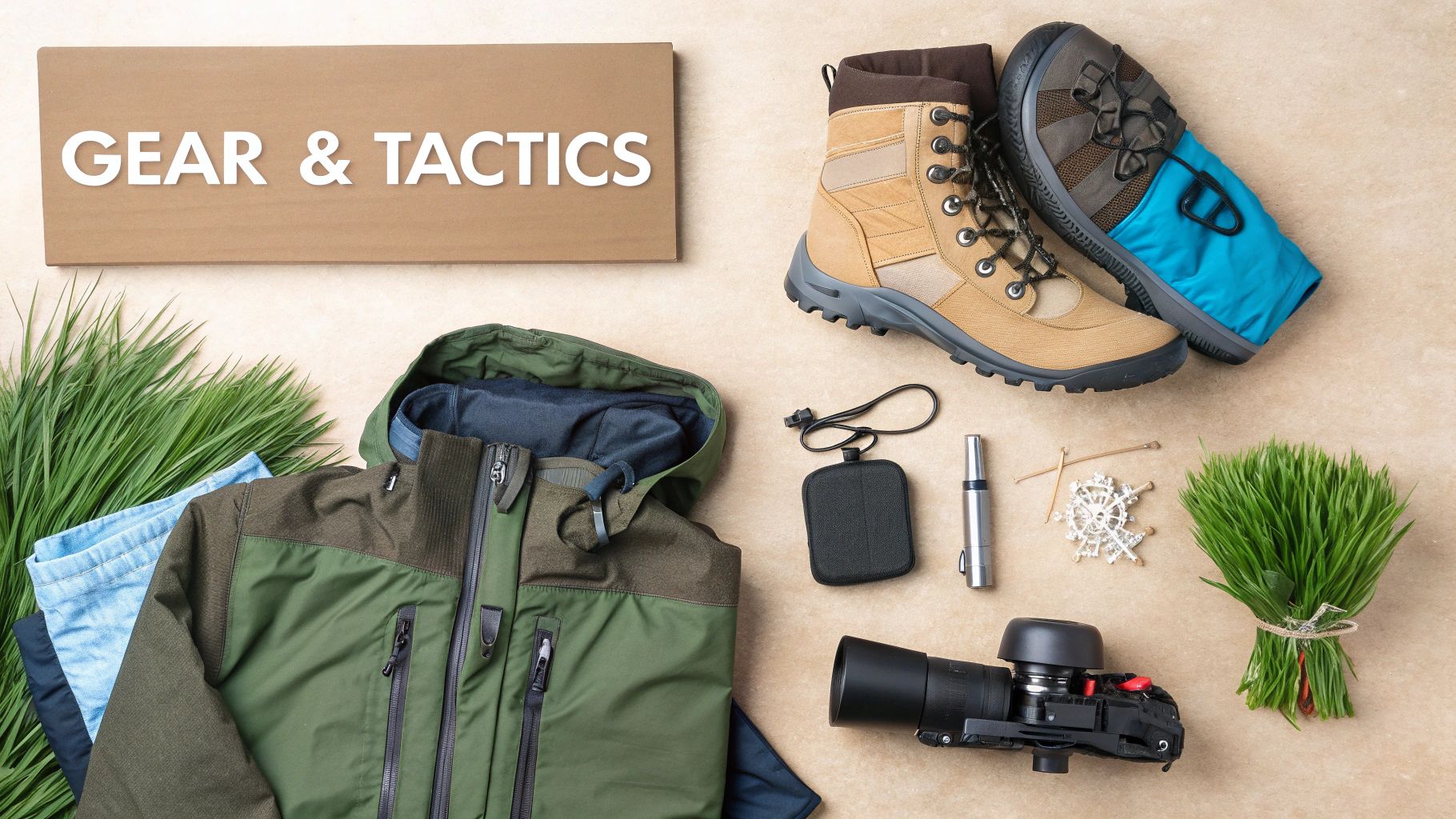
Out here, the right gear and a solid strategy are what separate a tough, fruitless hike from a successful hunt. Alberta’s landscapes are demanding, and the gear you pack isn't just for comfort—it's about giving yourself a genuine edge in the field. What works in one type of terrain can be completely useless in another.
Success comes down to matching your approach to the environment. The wide-open alpine basins, the rolling foothills, and the thick boreal forest each throw unique challenges your way. Let’s dig into the essential equipment and field-tested strategies you’ll need for Alberta's distinct elk country.
Gearing Up for Mountain Weather
If there's one thing you can count on in Alberta's high country, it's that you can't count on the weather. A beautiful, sunny morning can turn into a full-blown blizzard by afternoon, even in September. This is why a top-notch layering system isn't just nice to have; it's the single most important part of your kit. Forget one big, heavy jacket—think adaptable layers.
Your system needs three key pieces:
- Base Layer: This is your foundation. You want a moisture-wicking material like merino wool or a good synthetic that pulls sweat away from your skin, keeping you dry and warm.
- Mid Layer: This is your insulation. Think fleece or a puffy down jacket that traps your body heat. It’s the layer you’ll be adding or shedding most often as you hike, glass, or sit.
- Outer Layer: Your armour against the elements. A truly waterproof and windproof shell jacket and pants are non-negotiable. Make sure they're tough enough to handle bushwhacking through dense brush.
After your clothing, your optics are your most critical hunting tool. Good binoculars and a spotting scope are essential for picking apart distant hillsides and finding elk before they ever know you're there. Seriously, invest in the best glass you can afford. It will save you countless kilometres of hiking.
Alpine and High-Country Tactics
Hunting elk above the treeline is a game of patience and observation. This is classic spot-and-stalk country, where your success lives and dies by how well you can glass. The plan is simple: find a herd from a distance, map out an approach using the terrain for cover, and close the distance for a clean shot.
Calling can be a bit of a double-edged sword in these wide-open spaces. A bugle might get a response from a distant bull, but it also screams your exact location to every animal on the mountain. Use calls sparingly, maybe to locate a bull you've already spotted or to stop him for a shot. Your eyes are what you'll rely on most.
The alpine hunter's mantra is simple: let your glass do the walking. Spend 80% of your time behind your optics and only 20% on the move. Getting to a high vantage point at first light and glassing methodically is far more effective than just wandering around hoping to bump into an elk.
Foothills and Boreal Forest Strategies
The moment you drop into the rolling foothills or the dense northern bush, the playbook changes entirely. Visibility shrinks, and spot-and-stalk becomes nearly impossible. This is where calling becomes your most powerful tool. A smart sequence of cow calls, chirps, and the occasional bugle can bring a curious or fired-up bull right into your lap.
The trick is to set up in a spot that forces the bull to come looking for you, ideally with a clear shooting lane. In the timber, the wind is everything. An elk’s nose is its greatest defence, so you absolutely have to keep the wind in your favour at all times.
This kind of country can be a maze of hills, thickets, and draws, so a reliable navigation tool is a must. Modern hunters have a massive advantage here. An Alberta Conservation Association survey found that 88% of hunters target ungulates like elk, and many in the Foothills and Mountain regions struggle with land access. Their full hunter survey highlights just how critical it is to have tools that clearly show public land boundaries. This is where a good GPS becomes indispensable, both for finding your way and for staying on the right side of the law. For those using ATVs or sleds, understanding your GPS is even more critical—you can learn more from our guide on GPS systems for snowmobiles.
Your Ultimate Hunt Planning Checklist
Alright, you’ve got your tags figured out, your spot picked, and a hunt style in mind. Now it's time to connect all the dots. The best hunts I've ever been on weren't successful because of luck; they were built on a solid foundation of planning laid months before my boots ever hit the trail.
Think of it like fletching an arrow. Every single piece—the shaft, the nock, the fletching, the insert, the broadhead—has to be perfect and aligned. If just one part is off, the whole arrow flies crooked. Your hunt prep is the same way.
Let's break down the final prep into a timeline so nothing gets missed.
6-12 Months Before Your Hunt
This is the groundwork phase. What you do now will have the biggest impact on your success and enjoyment later. It’s all about getting your body and your applications in order.
- Get Physically Prepared: Don't underestimate Alberta's terrain. It can be absolutely punishing. Start a fitness routine now, focusing on cardio and building strength in your legs and core. The single best thing you can do? Start hiking regularly with a weighted pack. There's no better simulation for the real deal.
- Submit Your Draw Applications: This is the big one. The draw deadline for special licences usually falls in mid-June. If you miss it, you're on the sidelines for a year. With the high demand for Alberta elk hunts, this is your most critical deadline.
- Test and Tune Your Gear: The off-season is the time to dial everything in. Don't wait until the week before the hunt to discover your new boots give you blisters or your rifle isn't holding a zero. Use this time to test every single piece of kit, from your tent to your water filter.
1-2 Months Before Your Hunt
Now we shift from the big picture to the nitty-gritty details. Getting your logistics buttoned up now means you can focus on the hunt later, not on what you forgot back at the truck.
A well-organized camp and a clear logistical plan free up mental energy in the field. This allows you to focus entirely on hunting instead of worrying about forgotten supplies or navigation issues.
Start locking in your travel plans, whether you're driving up or flying in. This is also the perfect time to plan your menu, dehydrate meals, and pack your food rations by the day. Most importantly, download offline maps of your entire hunting area onto your GPS and your phone. You can't count on having cell service where the elk live.
The sheer interest in Alberta elk hunting is staggering—just look at the 460,792 licence sales and draw applications in 2023. It’s why planning is so crucial. To help manage the herds sustainably with this much pressure, post-season harvest surveys are mandatory for special licence holders. That data is essential for setting future seasons. You can dig into the numbers yourself in the official resident harvest report.
The Final Week
It’s go-time. This is your last chance for a final gear shakedown. Lay everything out and pack it using a detailed checklist. Then check it again.
Make sure a reliable friend or family member knows your exact plan: where you're going, when you'll be back, and when to call for help if they don't hear from you. Double-check that you have your physical hunting licences, your tags, your WIN card, and any permits you need. This final run-through lets you head into the mountains with a clear head, ready for the adventure.
A Few Common Questions About Alberta Elk Hunts
No matter how much you prepare, questions always pop up. Let's tackle some of the most common ones I hear from hunters getting ready for an elk hunt in Alberta. The idea here is to give you straight-up, clear answers so you can lock in your plans and feel good about them.
Can a Non-Resident Hunt Elk in Alberta?
Absolutely, but you have to follow some specific rules. If you're not a Canadian resident, you can't just go out and hunt big game on your own. You're required to hunt with a licensed Outfitter-Guide or be hosted by an eligible Alberta resident who has a Hunter Host licence.
For most hunters coming from outside Canada, hiring an outfitter is the most common and practical way to go. A good outfitter does more than just guide you; they take care of the entire licensing headache as part of their package. This ensures all your paperwork is sorted out long before your boots hit the ground.
What Is the Best WMU for Elk Hunting in Alberta?
That's the million-dollar question, isn't it? The truth is, there's no single "best" Wildlife Management Unit. The right spot for you boils down to your personal hunting goals, what kind of tag you can actually draw, and how much company you're willing to put up with from other hunters.
The Foothills and southern Mountain units are famous for a reason—they hold a lot of elk and the country is breathtaking. But success isn't about finding a magic number on the map. It's about putting in the work beforehand. The real secret is using digital mapping tools to dig into specific WMUs, looking for public land access, terrain that funnels elk, and recent harvest data.
The best WMU for you is the one you know inside and out before you ever set foot in it. Thorough e-scouting will beat a famous unit number every single time.
What Rifle Calibre Is Recommended for Elk in Alberta?
Alberta elk are big, tough animals. An ethical hunt depends on a well-placed shot from a rifle that's up to the task. The popular, time-tested calibres are popular for a reason—they get the job done.
You can't go wrong with these tried-and-true options:
- .30-06 Springfield: The classic, all-around workhorse that has probably taken more elk than any other calibre.
- .300 Winchester Magnum: A fantastic choice if you expect longer shots in open country, offering excellent downrange energy.
- 7mm Remington Magnum: Another flat-shooting round that's a favourite among mountain hunters.
At the end of the day, shot placement is far more important than the calibre stamped on your rifle. Pick a rifle you shoot accurately and confidently, and load it with a premium, controlled-expansion bullet built for big game.
Do I Need Bear Spray When Hunting Elk in Alberta?
Yes. Let's be crystal clear: this isn't optional. It's a non-negotiable piece of safety gear. The best elk habitat in Alberta is also prime grizzly and black bear country, and their populations are healthy.
Keep your bear spray where you can grab it instantly—on your belt or a pack strap, not buried in your bag. You also need to know how to use it in a split second under extreme stress. Your safety, and the safety of anyone with you, could literally depend on it.
Planning the perfect hunt is all about having the right information at your fingertips. With HuntScout, you can layer WMU boundaries over Crown Land maps, check season dates, and save all your scouting spots for offline use. It turns your research into a plan you can actually use in the field. Start building your next adventure at https://huntscout.app.