Only a quarter of hunting apps let you download maps for the backcountry, yet the priciest one still does.
We examined 16 top hunting apps across 4 sources and discovered that only a quarter support offline maps, even though the priciest app is one of them.
| Name | Price | Key Features | Source |
|---|---|---|---|
| GoHunt | $169.99 annual fee | precise GPS tracking, detailed property boundaries, species-specific info, on-and-offline map capabilities, elevation layer, multiple map overlays, custom maps, waypoints/pins, scouting analytics | libertysafe.com |
| HuntStand | $29.99 per year | Mapping, Property boundary tools, Weather integration | huntscrape.com |
| onX Hunt | $15 a month | GPS-enabled scouting, historical data logging, map layers (tree distribution, crop, thermal cover), real-time weather updates, offline maps | libertysafe.com |
| HuntScrape | Free | Section-level hunt scheduling, Harvest tracking, Volunteer management, Property owner reports, Member management | huntscrape.com |
| OnXMaps Hunt | Free | Overlay various data sets, Download specific sections of the map to your phone, Land ownership data, Load different layers for public land access | quiverapp.co |
| Quiver Hunting App | Free | Track key events from the stand, Log custom field notes, Monitor weather, sunrise & sunset, wind speed & direction, Barometric pressure | quiverapp.co |
| ScoutLook | Free | Weather forecast with cloud cover and radar, ScentCone wind direction system, Mapping with satellite imagery | outdoorlife.com |
| Quiver | Free | Record deer sightings and activity, Add notes and images, Capture weather, time, and moon phase for each event | outdoorlife.com |
| Antler Insanity | Free | Mark location in field for later navigation, Mark property boundaries, Sunrise/sunset and civil twilight times | outdoorlife.com |
| iSportsman ARX | — | Check‑in/check‑out for hunting access areas | huntscrape.com |
| DeerMapper | — | Deer observation, Harvest mapping | huntscrape.com |
| Kindle App | — | Access entire library of books, Download books to phone, Low impact reading | quiverapp.co |
| Weather Underground Forecasts app | — | Temperature, precipitation, pressure and wind graphs, Line chart of upcoming changes | quiverapp.co |
| GAIA | — | Topographic map, Mark waypoints, Measure distances, Offline use without cellular connection | quiverapp.co |
| Dropbox | — | Organize trail camera photos, Sync across devices, Upload and access pictures, Folder organization by property or buck, File sharing | quiverapp.co |
| Weather Underground Forecasts app | — | Temperature, precipitation, pressure and wind graphs, Line chart of upcoming changes | quiverapp.co |
If you want the best hunting app for tracking harvest, look for three things: offline map support, easy harvest logging, and clear WMU boundaries. An app that lets you save maps before you head out means you won’t lose GPS when the signal dies. Logging each animal with date, location, and conditions helps you spot patterns for next season.
Start by picking a free app with offline maps, like GoHunt, then test the harvest log on a short walk. Add waypoints for good beds, and note weather each time. Over a few weeks you’ll see which spots work best.
Need a deeper dive? Check the best hunting app 2024 guide for more detailed reviews.
For a completely unrelated tip on planning events, see the Photo Booth Rental for Graduation Party: A Step‑by‑Step Guide.
Step 1: Choose the Right Features for Your Hunting App
Finding the best hunting app for tracking harvest starts with knowing which tools actually move you forward. You don’t need a fancy list, just three core features.
Essential feature categories
First, you need offline maps. When you’re deep in the woods, cell service disappears, but a saved map keeps your GPS alive.
Second, a simple harvest log. Record the date, species, location, and weather in a few taps. Over time those notes become a pattern map you can read.
Third, clear WMU (Wildlife Management Unit) boundaries. Knowing the exact legal edge saves you from a ticket and helps you plan future trips.
Does any app you’ve tried hit all three?
After you pick a candidate, take it for a short test run. Load a section of the map before you head out, log a mock harvest at a known stand, and note the weather. If the app saves the data without a signal, you’ve got a winner.
Quick checklist
- Can you download maps for offline use?
- Does the harvest log let you add date, species, location, and conditions?
- Are WMU boundaries shown clearly on the map?
Run through this list on a real hunt, then compare notes after a few days. The app that checks every box will feel like a natural extension of your gear.
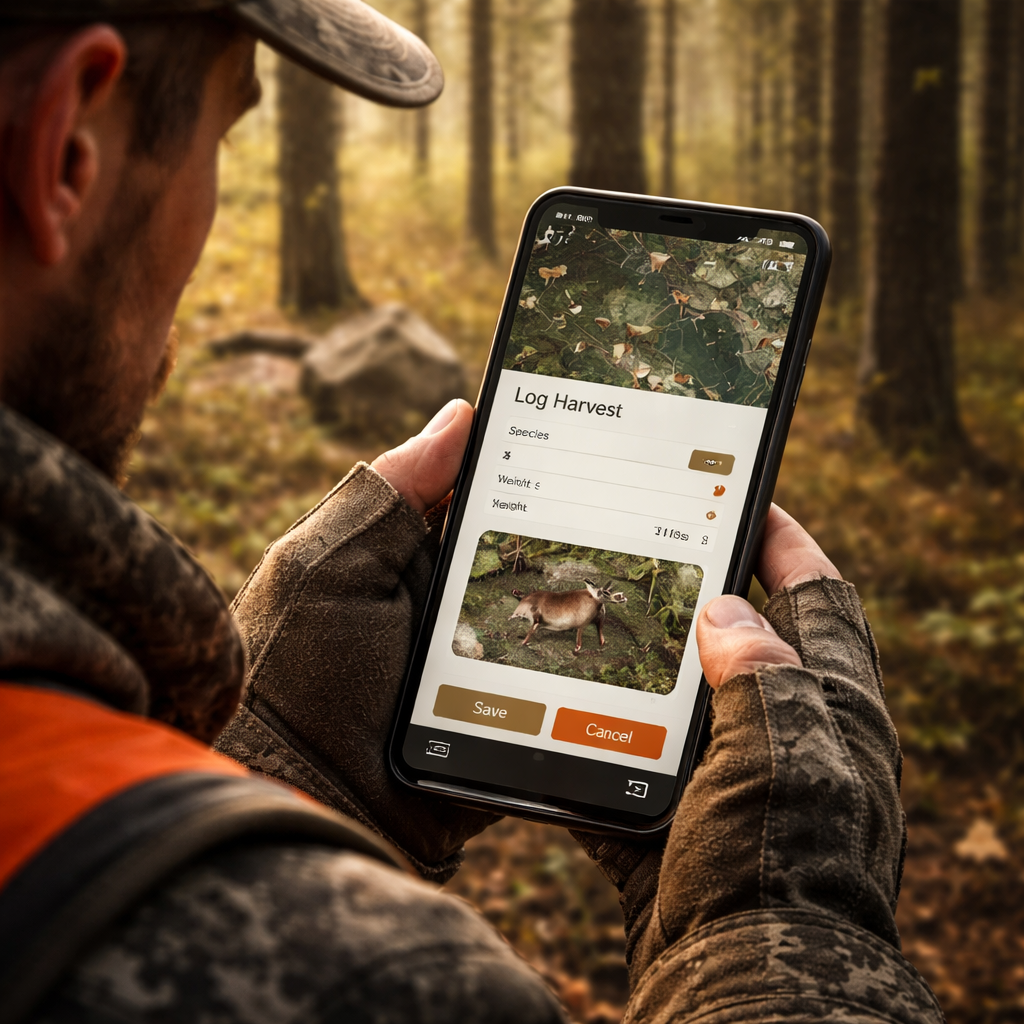
When the app passes your test, you’ve nailed the first step. The rest of the guide will show how to fine‑tune settings and get the most out of those features.
Step 2: Set Up Your Account and Sync Devices
Now that you know what to look for, it’s time to actually get the app on your phone and make it work for you. This part is all about getting in, setting up, and making sure every device you carry talks to the same data.
Create and Verify Your Account
Open the app and tap the sign‑up button. Use an email you check often – you’ll get a verification link. Click it, then choose a password you can remember but isn’t easy to guess. That’s it. You’re in.
Link Your Phone, Tablet, and Maybe a Watch
Most hunting apps let you log in on more than one device. After you sign in on your phone, go to the settings menu and look for “Sync Devices” or “Add Device.” Scan the QR code with your tablet, or type the same login info. The app will pull your harvest log, waypoints, and map layers onto each screen.
Why bother? Imagine you’re scouting a new area with a tablet in the truck, then you switch to a smaller phone while on the trail. All your pins stay right where you left them.
Download Offline Maps and Layers
Before you hit the woods, hit the “Offline Maps” tab. Pick the WMU or region you’ll hunt in and hit download. Most apps also let you add extra layers – weather, land ownership, or topography. Grab the ones you need while you still have Wi‑Fi.
Turn On Notifications (but not too many)
Enable alerts for weather changes or upcoming season dates. A quick push can save you from a sudden storm or a missed legal window. Just keep the number low so you don’t get distracted while you’re out in the field.
Quick Sync Checklist
- Account verified via email
- Login on all devices you’ll use
- Offline map for your WMU downloaded
- Key layers (weather, property lines) turned on
- Push notifications set for weather/season alerts
Follow this checklist and you’ll have a reliable, synced hub for every harvest entry you make. Want more detail on which GPS tools matter most? Check out the best hunting GPS app guide for deeper insight.
Step 3: Track Your Harvest in Real Time (Video Demo)
Open the Harvest Tracker
First, tap the harvest icon at the bottom of the screen. The view pops up with a few fields – date, species, weight, and weather. It’s only three taps before the data is saved.
You don’t need to type a full description. Pick the species from the drop‑down, slide the weight bar, and hit the sun icon to add the current temperature. The app stamps the exact GPS spot automatically.
Watch the Entry Update Live
Now the magic: the map on the same screen shows a blue dot moving as you walk. As soon as you hit “save,” a tiny pin drops right where you logged the buck. The pin flashes for a second, then stays solid.
If you have a second device – a tablet in the truck or a smartwatch – the pin appears there instantly. That’s real‑time sync without any extra steps.
Use the Video Demo for a Quick Run‑Through
The app includes a short demo video right in the help menu. Press play, and you’ll see the whole process from start to finish. Pause at any point, then try it yourself. It’s a fast way to get comfortable before the season opens.
Tip: keep your phone in airplane mode while you’re out. It stops the device from hunting for signal, which saves battery, but the GPS still works and the live pin still shows up on every synced screen.
When you finish the hunt, open the “Harvest History” tab. Each entry lists the photo you attached, the exact time, and a link back to the map view. That way you can spot patterns – maybe the same ridge yields more bucks in the early morning.
Want to see how the map layers stack under your pins? Check out the best hunting map app guide for a deeper look at layering weather, terrain, and WMU borders.
Step 4: Analyze Data and Optimize Future Hunts
Now that your pins are saved, it's time to look back and learn.
Open the harvest history screen and scroll through each entry. Each line shows the date, species, weight, weather, and exact GPS point.
Ask yourself: which spots gave the biggest bucks? Which times of day showed the most activity? Write those answers down.
Pull the numbers
Use the app’s filter tool to sort by weight or by hour. A quick tap will give you a list of the top five entries.
Spot patterns
Overlay the weather layer on those top pins. You might see that most big bucks came when the wind was from the north and the temperature was under 60°F.
| Factor | Observation | What to do |
|---|---|---|
| Time of day | Early morning brings more bucks | Plan stands for 5 to 7 am |
| Weather | Cool temps boost movement | Target cool days, watch wind |
| Location | Ridge pins rank high | Add more waypoints on ridges |
Take the list and turn it into a simple checklist for your next outing. Before you leave, set a reminder to check the wind direction and to place a pin on the ridge you saw work.
If you want to see how adding extra map layers can help spot those trends, check the best hunting map app guide.
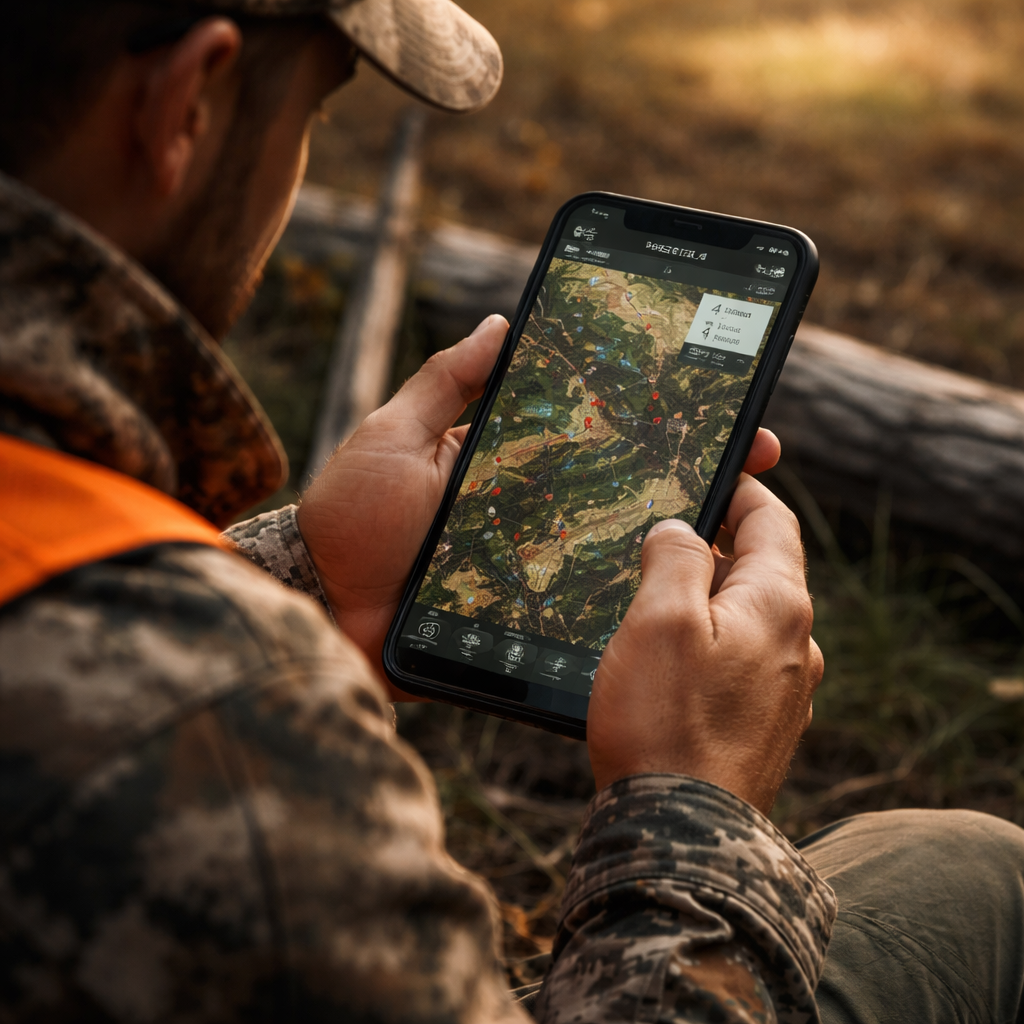
Keep your log tidy and your phone charged. A clean data set means faster tweaks and better hunts next season.
Conclusion
Choosing the best hunting app for tracking harvest means you’ve already seen how only a few apps give you offline maps. That tiny 25 % group is where the real power lives, letting you log each buck even when the signal drops.
Focus on three must‑haves: offline map support, a quick harvest log, and clear WMU boundaries. If an app ticks those boxes, you’ll turn raw data into a map that points you to the next big buck.
Still wondering how to get started? Pick a free trial, log a fake entry on your next walk, and watch the pins line up, then repeat with real hunts.
Keep tweaking your filters, add a short note after each stand, and let the pattern guide your future spots. Ready to make every hunt count? Start testing an app today and let your data do the scouting.
FAQ
What should I look for in the best hunting app for tracking harvest?
First, make sure the app works offline. You need maps that stay visible when the signal drops, otherwise you’ll lose your spot. Second, check that the harvest log is simple – a few taps for date, species, weight, and weather. Third, verify that WMU boundaries are clear on the map so you stay legal. Those three features separate a useful tool from a gimmick.
Can a free app give me offline maps for my hunt?
Most free apps in our research lack offline‑map support. Only four out of sixteen apps – about a quarter – let you download maps, and they’re all paid. That means you’ll usually have to pay for offline capability. If you’re on a tight budget, you can still use a free app for logging, but you’ll need a backup paper map or a cheap paid upgrade for offline use.
How do I log a harvest quickly in the field?
Open the harvest screen right after the shot and tap the big “Add” button. The app pulls your GPS location automatically, so you don’t type coordinates. Fill in species, weight, and a short weather note – a phrase like “clear, 45°F, wind N”. If the app lets you snap a photo, do it now. Then save; most apps will sync later when you find Wi‑Fi.
What are the common mistakes that ruin harvest data?
Skipping the weather field is a big one – without it you can’t spot patterns later. Another slip is using vague locations instead of the map pin; the GPS point is far more accurate. Forgetting to back up the log before a battery dies also hurts you. Finally, entering data after you get home can lead to memory errors, so try to record on the spot.
How often should I back up my harvest logs?
Set the app to auto‑sync whenever you have Wi‑Fi. That way each entry is saved to the cloud the moment you’re back at a lodge or cabin. If auto‑sync isn’t an option, do a manual backup at the end of each hunting day. A quick check on your tablet or computer ensures you haven’t lost anything if a phone dies.
Is it worth paying for a premium app if I only hunt a few times a year?
If you only go out a couple of times, a free app can cover basic logging, but you’ll miss offline maps and smooth WMU overlays. Those features often save you time and keep you legal, which can be worth the cost of a $15‑$30 per year subscription. Think of it as buying a reliable compass – a small price for peace of mind when you’re out in the woods.