Step by Step Hunting Regulations for Ontario and Alberta

Getting ready for hunting season in Ontario or Alberta can feel overwhelming without the right guidance. Understanding current provincial rules is the foundation for legal and enjoyable outings, especially for newer hunters eager to avoid costly mistakes. This article delivers step-by-step provincial regulations and practical tips so you can confidently plan your trip, choose the right permit, and follow all the crucial requirements designed to protect both wildlife and your hunting privileges.
Table of Contents
- Step 1: Review Current Provincial Hunting Regulations
- Step 2: Select Your Wildlife Management Unit And Season
- Step 3: Obtain Required Licences And Tags
- Step 4: Plan Your Hunt With Huntscout Tools
- Step 5: Verify Compliance During And After Your Hunt
Quick Summary
| Key Point | Explanation |
|---|---|
| 1. Review Provincial Regulations | Always consult the latest hunting regulations summary for your province to ensure compliance during hunting. |
| 2. Select Your Wildlife Unit | Choose the appropriate Wildlife Management Unit and verify the specific hunting seasons for your target species. |
| 3. Obtain Required Licences | Acquire valid hunting licences and tags tailored to your intended species and WMU; proof of hunter education may be needed. |
| 4. Utilize HuntScout Tools | Use HuntScout’s digital tools for efficient planning, including regulatory updates and mapping for hunting areas. |
| 5. Verify Compliance Thoroughly | Ensure consistent adherence to hunting regulations, including documentation and tagging, to avoid significant penalties. |
Step 1: Review current provincial hunting regulations
Navigating hunting regulations in Ontario and Alberta requires understanding the official annual guidelines published by provincial authorities. Hunters must carefully review the provincial hunting regulations summary to ensure legal and responsible hunting practices.
Each province maintains comprehensive documentation that outlines critical details hunters need to know. For Ontario, the Ministry of Natural Resources and Forestry releases an annual Hunting Regulations Summary, while Alberta produces a detailed Guide to Hunting Regulations that covers everything from licensing requirements to specific hunting seasons.
To effectively review these regulations, download the most recent PDF version from the respective provincial wildlife websites. Take time to carefully read through the entire document, paying special attention to sections covering species specific rules, hunting zone maps, required licenses, permitted hunting methods, and seasonal restrictions. Note any changes from previous years that might impact your hunting plans.
Pro tip: Always keep a printed or digital copy of the current regulations with you during your hunting expedition for immediate reference and compliance.
Here is a summary of key differences between hunting regulations in Ontario and Alberta:
| Province | Regulation Summary Publisher | Licence Purchase Methods | Wildlife Management Structure |
|---|---|---|---|
| Ontario | Ministry of Natural Resources & Forestry | ServiceOntario, online portal | Wildlife Management Units (WMU) |
| Alberta | Alberta Environment & Protected Areas | Registry offices, online portal | Game Management Areas (GMA) |
Step 2: Select your Wildlife Management Unit and season
Selecting the right Wildlife Management Unit (WMU) is crucial for legal and successful hunting in Ontario and Alberta. These geographic regions have specific hunting regulations and seasonal restrictions that determine where and when you can hunt particular species.
To choose your WMU effectively, start by obtaining the most recent provincial wildlife maps and regulations. Each province divides its territory into distinct management units with unique hunting parameters. In Ontario, the Ministry of Natural Resources and Forestry provides detailed WMU maps that outline precise boundaries and seasonal allowances. Alberta similarly breaks its hunting regions into carefully defined units with specific quotas and species limitations.
Review the map and identify the WMU closest to your intended hunting location. Pay close attention to the specific hunting seasons for different game species within that unit. Some WMUs might have shorter seasons or special restrictions for certain animals. Cross reference the seasonal calendars with your target species to ensure you are hunting legally and ethically.
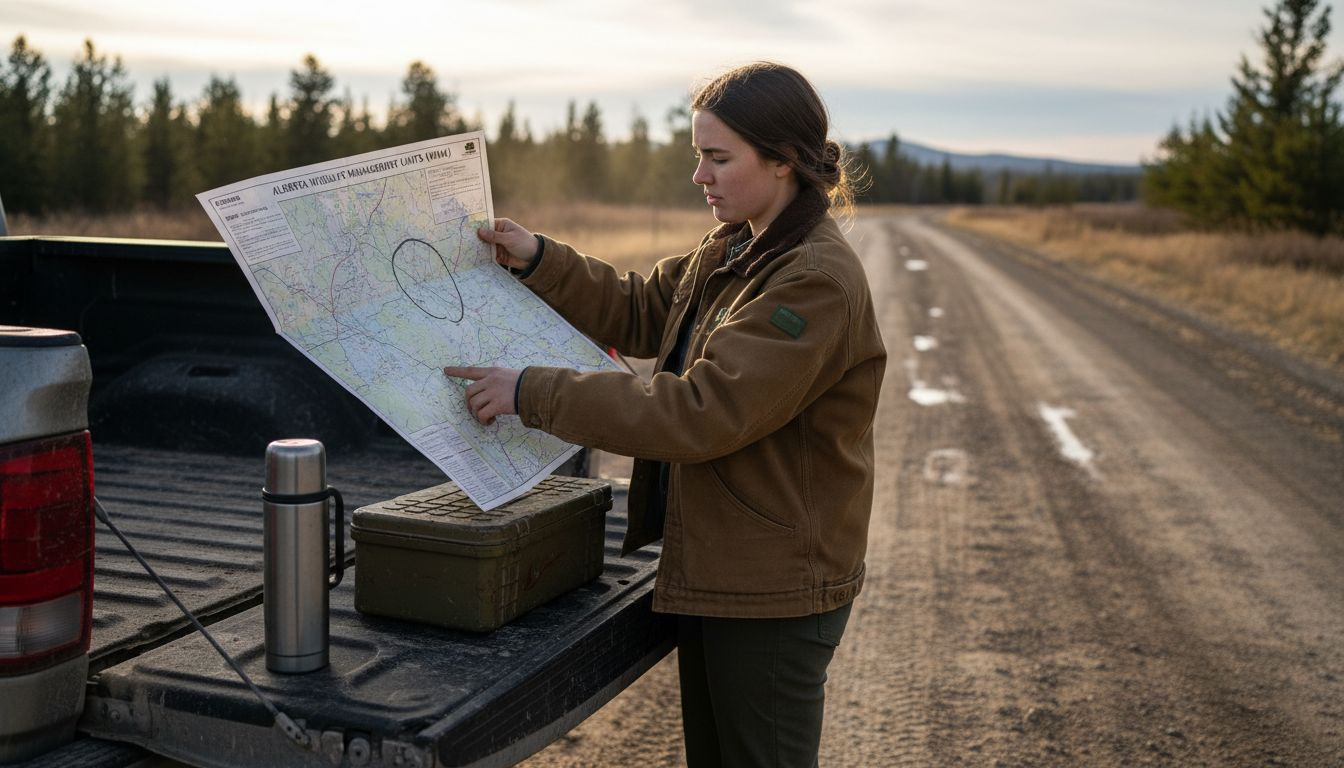
Pro tip: Always verify your chosen WMU’s regulations directly with provincial wildlife authorities before planning your hunting expedition.
Step 3: Obtain required licences and tags
Obtaining the correct hunting licences and tags is a critical step in preparing for your hunting expedition in Ontario or Alberta. While no specific online source was provided, the process typically involves several key steps to ensure legal compliance.
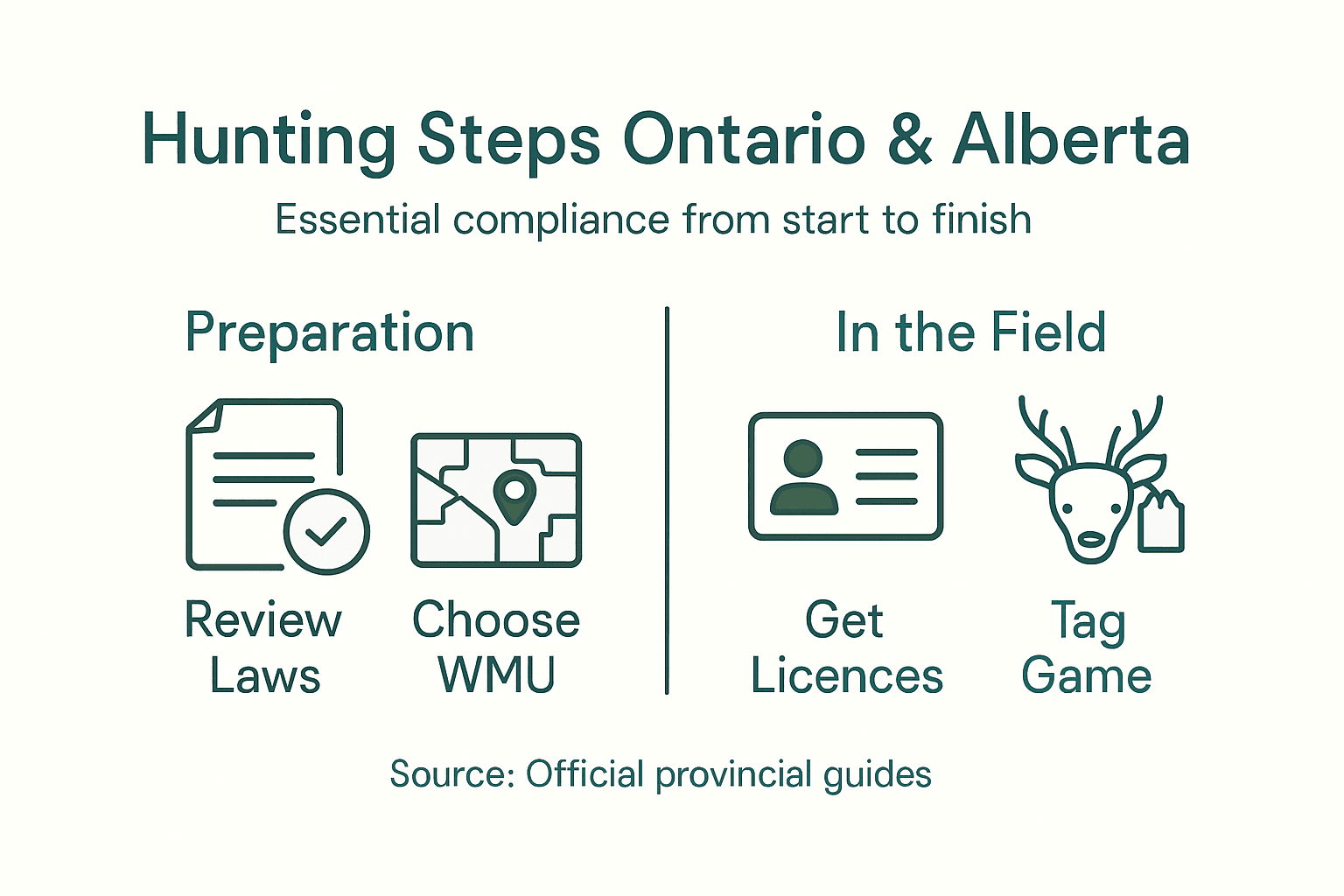
For Ontario and Alberta hunters, the licensing process requires careful attention to detail. You will need to purchase a valid hunting licence specific to the species you plan to hunt and the Wildlife Management Unit where you will be hunting. This usually involves visiting a local ServiceOntario or Alberta registry office, or completing an online application through the provincial wildlife department. Be prepared to provide proof of hunter education certification, which is mandatory for most hunters.
Each licence type has specific requirements and restrictions. Big game licences differ from small game or waterfowl permits, and you may need additional tags for certain species like deer or moose. Some tags are limited in number and distributed through a draw system, so apply early and be prepared with alternative options if your first choice is not available.
Pro tip: Keep digital and physical copies of your hunting licences and tags with you at all times during your hunting expedition, and ensure they are current and match your intended hunting location and species.
Step 4: Plan your hunt with HuntScout tools
HuntScout provides Canadian hunters with sophisticated digital tools designed to simplify hunting preparation and ensure regulatory compliance. These innovative resources help you navigate the complex landscape of hunting regulations in Ontario and Alberta with unprecedented ease.
Utilizing online hunting management platforms allows hunters to streamline their planning process. HuntScout offers advanced features like interactive wildlife management unit maps, real-time regulation updates, and draw application tracking. These tools enable you to identify precise hunting locations, understand seasonal restrictions, and manage your hunting permits digitally.
The platform’s comprehensive approach integrates multiple planning elements. You can mark potential hunting zones, track season dates, download offline maps for remote areas, and receive instant notifications about regulatory changes. By centralizing critical hunting information, HuntScout transforms complex administrative tasks into a straightforward, user friendly experience that empowers hunters to make informed decisions.
Pro tip: Sync your HuntScout account across devices to ensure you always have the most current hunting information at your fingertips.
Step 5: Verify compliance during and after your hunt
Ensuring full compliance with hunting regulations is crucial for maintaining legal and ethical hunting practices in Ontario and Alberta. Hunters must be prepared to demonstrate adherence to provincial wildlife management standards at all times during their expedition.
During your hunt, carefully follow hunting regulations by maintaining visible hunter orange clothing, carrying all required documentation, and strictly observing designated hunting hours. This means keeping your hunting licence, wildlife management unit tags, and any additional permits readily accessible. Conservation officers may conduct random inspections, so being prepared with proper documentation is essential.
After harvesting game, immediate compliance steps are critical. You must properly tag and report your harvest according to provincial guidelines. This typically involves completing official reporting forms, recording precise location and species details, and ensuring all tagging requirements are met within the specified timeframe. Failure to comply can result in significant penalties, including potential fines and future hunting licence suspensions.
Pro tip: Photograph your completed tags and harvest documentation as a backup in case of unexpected field inspections.
The following table outlines essential compliance steps during and after your hunt:
| Stage | Action Required | Impact of Non-Compliance |
|---|---|---|
| During hunt | Wear hunter orange, carry all permits | Fines, possible licence suspension |
| After harvest | Tag and report game, document details | Penalties, future hunting restrictions |
Master Hunting Regulations with Confidence Using HuntScout
Navigating the complex hunting regulations in Ontario and Alberta can feel overwhelming with so many rules about Wildlife Management Units, licensing, and seasonal restrictions to remember. This article breaks down those steps clearly but putting that knowledge into practice during your hunt is another challenge. That is where HuntScout.app becomes an indispensable ally for Canadian hunters who need real-time access to updated provincial regulations, interactive WMU maps, and instant AI guidance on licences and compliance.
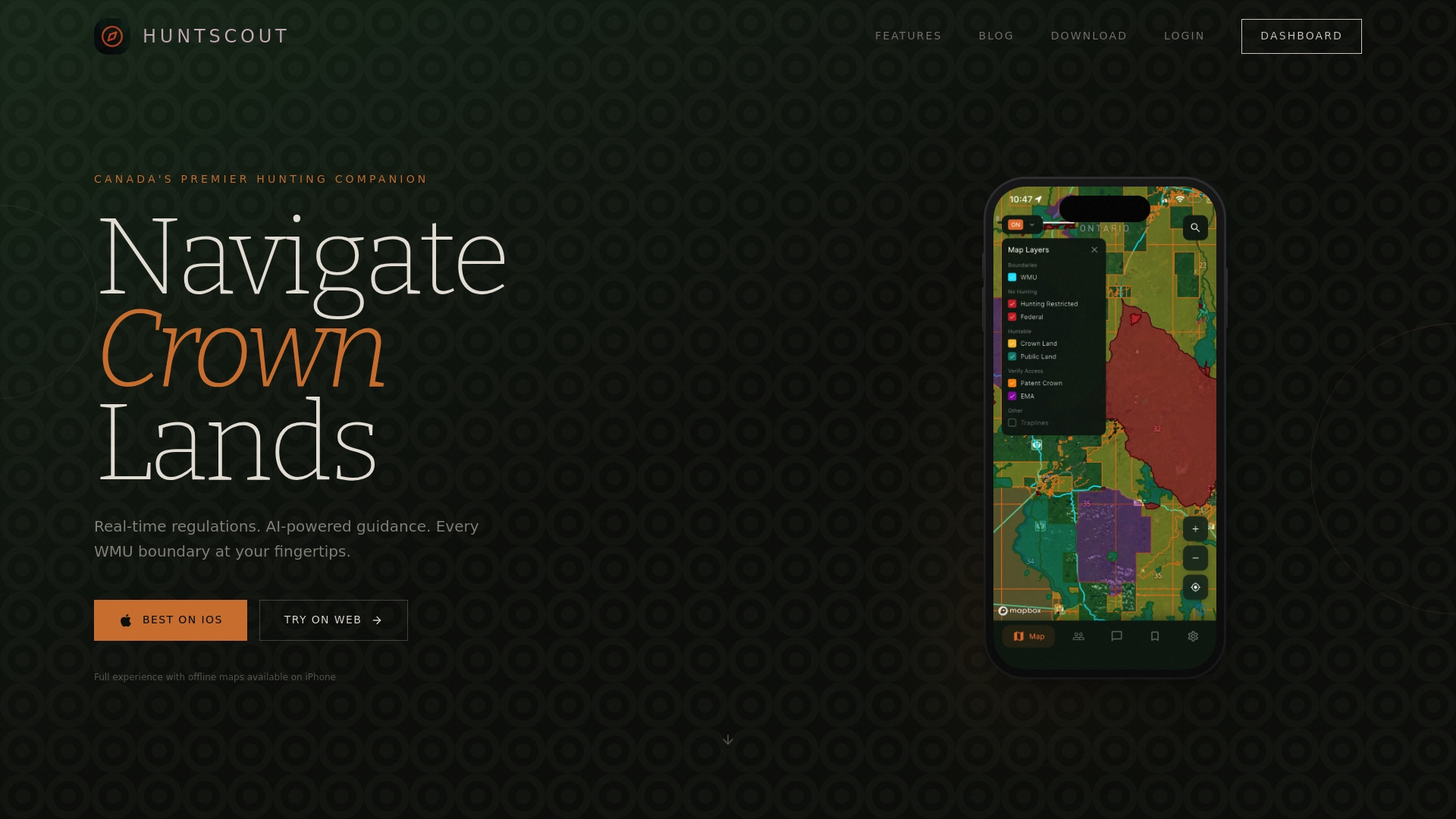
Take control of your hunting expeditions by leveraging HuntScout’s detailed crown land maps and regulation tracking tools. Whether you are selecting the right Wildlife Management Unit or verifying compliance in the field, HuntScout’s mobile platform and web access ensure you stay informed and prepared. Start using HuntScout today to simplify your planning, avoid penalties, and focus on the thrill of the hunt. Explore all features at HuntScout and connect with Canada’s hunting community to enhance your experience.
Frequently Asked Questions
What steps should I take to review hunting regulations in Ontario and Alberta?
To effectively review hunting regulations, start by downloading the most recent provincial regulations summary for your area. Carefully read through the entire document, paying attention to species-specific rules, zone maps, required licences, and seasonal restrictions.
How do I select the appropriate Wildlife Management Unit for hunting?
To select the right Wildlife Management Unit (WMU), obtain the latest provincial wildlife maps and regulations. Identify the WMU closest to your intended hunting location and cross-reference it with the hunting seasons for your target species to ensure compliance.
What do I need to obtain the required hunting licences and tags?
To obtain the necessary hunting licences and tags, visit the relevant provincial registry office or complete an online application. Ensure you have proof of hunter education certification and confirm that the licences match your intended hunting location and species.
How can HuntScout assist me in planning my hunting expedition?
HuntScout provides effective digital tools that simplify the planning process by offering interactive WMU maps and real-time regulation updates. Use these resources to mark potential hunting zones, track hunting seasons, and manage your hunting permits efficiently.
What should I do to ensure compliance during and after my hunt?
During your hunt, make sure to wear visible hunter orange and carry all required documentation, including your hunting licence and tags. After harvesting game, properly tag and report your harvest according to provincial guidelines to avoid penalties.