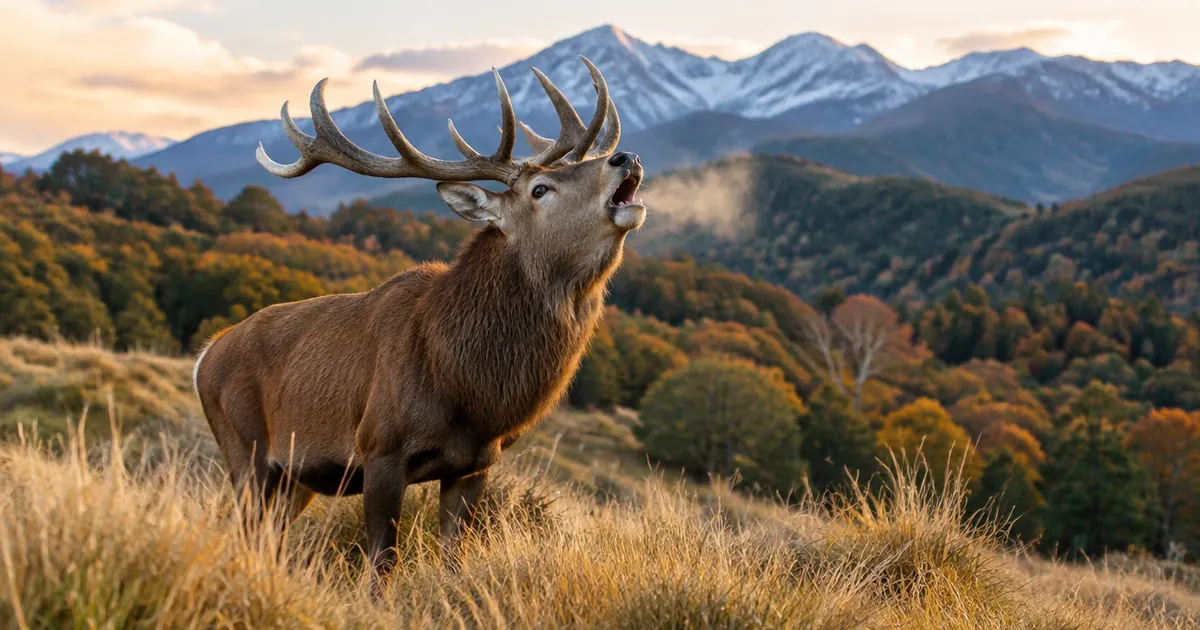
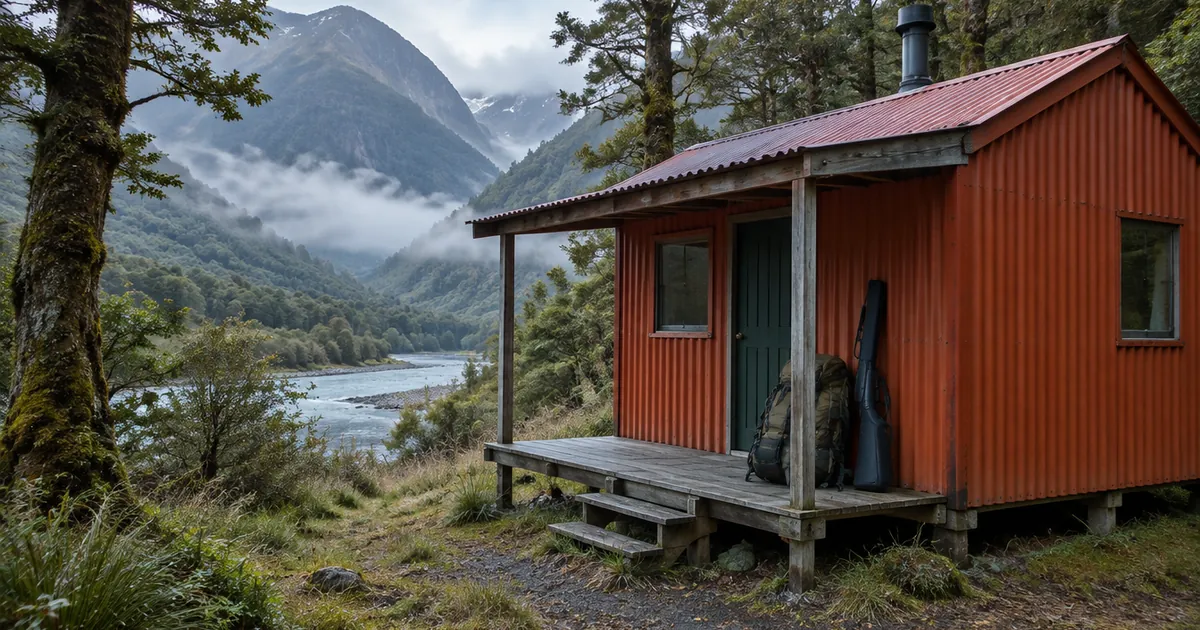
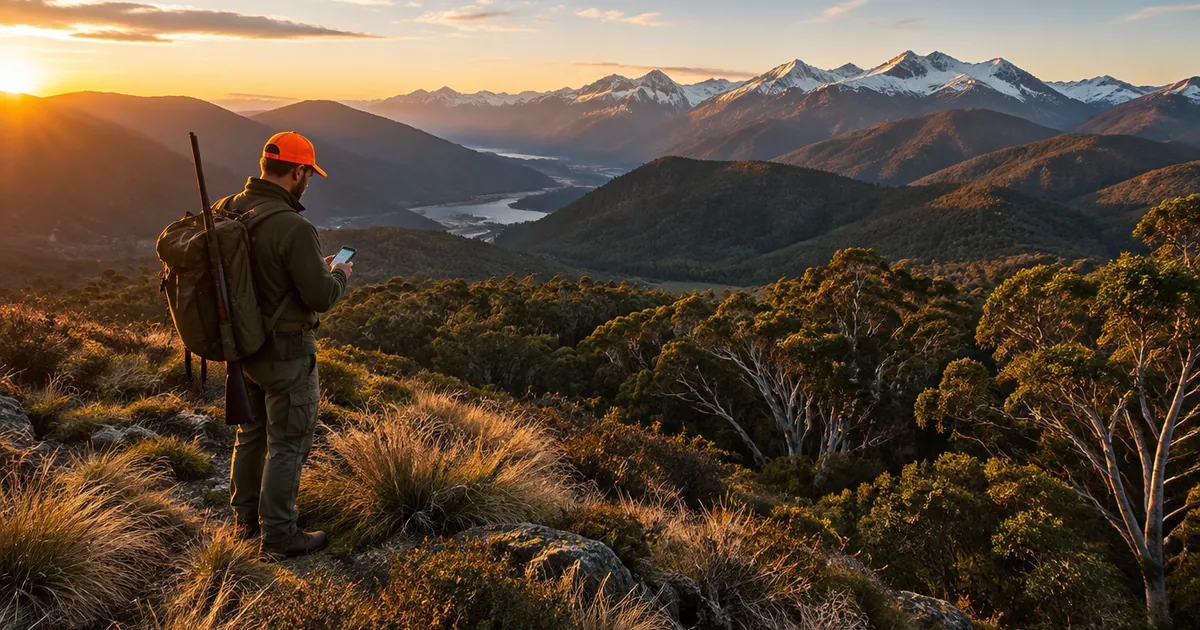
Quick answer: Most public land hunting in New Zealand is on public conservation land managed by DOC: national parks, forest parks and conservation areas covering roughly a third of the country. With a free DOC hunting permit you can hunt red deer, fallow deer, sika, chamois, pigs and goats in open areas year-round, with no bag limits on deer. The North Island is bush hunting for red deer, sika (Kaimanawa and Kaweka), pigs and goats. The South Island adds the alpine species, tahr and chamois, plus the big red deer country of the Southern Alps and Fiordland's wapiti. Check each block's DOC page for dogs, access and roar-season bookings.
New Zealand has no native land mammals apart from bats, so every deer, pig, goat, tahr and chamois here was introduced, and DOC treats most of them as pests to be controlled. For hunters that means generous access and no closed seasons on the main big game. It also means the rules come from land management, not game management: the question is less when and more where, and under what conditions.
North Island vs South Island
| North Island | South Island |
|---|
| Terrain | Dense bush, steep gullies, pumice country in the central plateau | Alpine tops, river flats, open tussock, big beech valleys |
| Key public land | Kaimanawa, Kaweka, Ruahine, Tararua and Te Urewera forests and parks | Southern Alps conservation land, Kahurangi, Arthur's Pass, Westland, Aspiring and Fiordland national parks, Molesworth |
| Main species | Red deer, sika, fallow (local), sambar and rusa (mostly private land), pigs, goats | Red deer, chamois, Himalayan tahr, fallow (local), wapiti (Fiordland), white-tailed deer (far south), pigs, goats |
| Style | Close-range bush stalking, often in rain | Glassing faces and basins, long walks in, often fly-in |
| Typical access | Road ends and tramping tracks, some via private land | River valleys, huts, air access zones |
North Island highlights
- Kaimanawa and Kaweka forest parks, south-east of Taupō, are home to New Zealand's sika deer. The country is steep and thick, and hunters who do well there tend to know the area intimately. DOC huts and tracks spread through both parks.
- Ruahine and Tararua ranges run down the spine of the lower North Island, with red deer, pigs and goats and a good hut network, within reach of Palmerston North and Wellington.
- Te Urewera is a vast bush area in the east. It's managed under its own legislation by Te Urewera Board, so check its specific hunting rules and permit system rather than assuming DOC's.
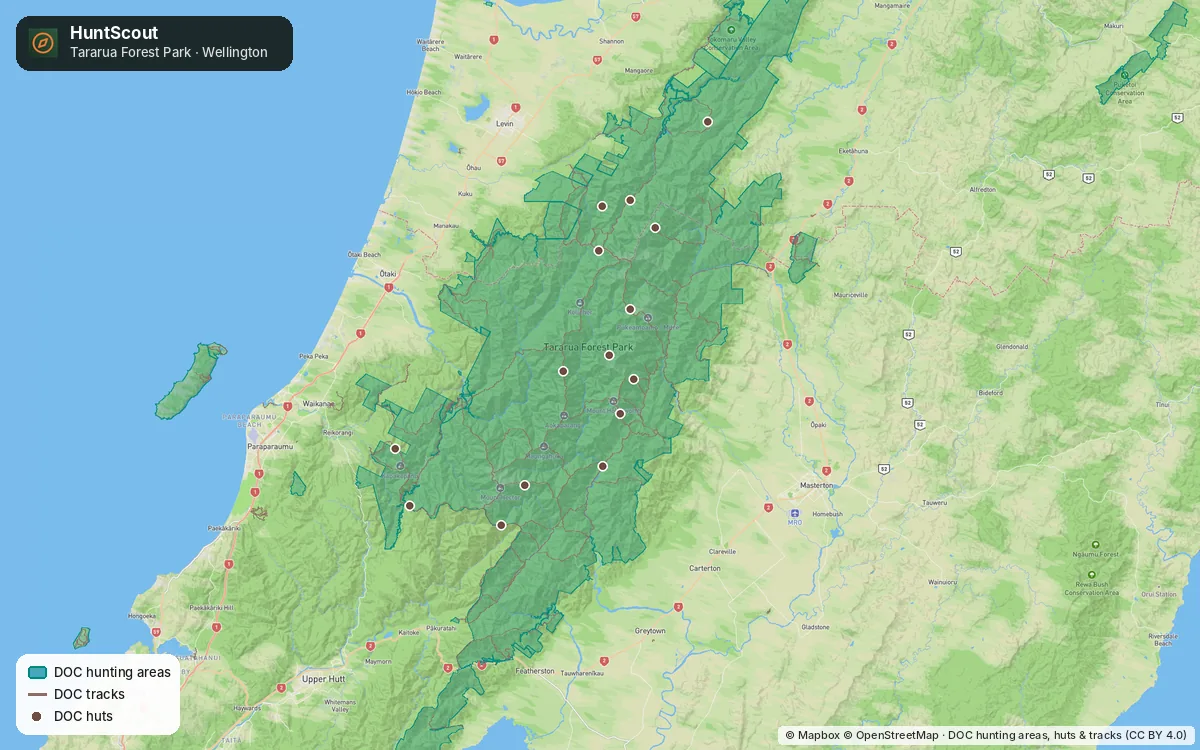 Tararua Forest Park in HuntScout, an hour or two from Wellington: DOC hunting areas, huts and tracks.
South Island highlights
- The Southern Alps from Arthur's Pass down to Aoraki/Mount Cook and Aspiring are the heartland for tahr and chamois, with red deer on the bush edges and river flats.
- South Westland (Haast) and the Wānaka valleys are classic red deer country, and many blocks there run as roar blocks in March and April (see below).
- Fiordland holds the only wapiti in the country, hunted in a balloted area during the rut, as well as red deer throughout.
- Molesworth, in Marlborough, is a high-country station with a balloted roar.
What you can hunt, and where
The table below is a starting point, built from DOC's species pages and its distribution surveys (which HuntScout shows as map layers). The surveys are from 2007 and 2014, so treat them as a guide to where herds have been, not a guarantee.
| Species | Where | Season on public land |
|---|
| Red deer | The most widespread deer species, on both islands | No closed season (DOC) |
| Sika deer | Kaimanawa and Kaweka forest parks | No closed season (DOC) |
| Fallow deer | Scattered herds on both islands | No closed season; check the local DOC office for the herd you plan to hunt (DOC) |
| Sambar and rusa deer | North Island only, and DOC says sambar are mostly on private land | Check DOC and the landowner |
| Wapiti | Fiordland National Park | Balloted area during the rut, 1 March to 30 April |
| White-tailed deer | Small herds in the far south | Check DOC for the area |
| Chamois | South Island high country | No closed season (DOC) |
| Himalayan tahr | Central Southern Alps | DOC runs tahr control under a plan; check DOC's tahr page for current exclusion zones and operations |
| Pigs and goats | Widespread on both islands | Covered by the open permit in open areas; DOC encourages hunting |
| Wallabies | Bennett's wallaby in South Canterbury, dama in the Rotorua lakes area | Hunting available; DOC lists Bennett's, dama and parma wallabies |
| Game birds | Nationwide | Fish & Game licence, seasons by region (from 2 May 2026 in most regions) |
Most native birds and animals are protected under the Wildlife Act 1953. If you're not sure, don't shoot.
Public conservation land vs private land
Public conservation land is the backbone of NZ public hunting. You need a DOC hunting permit, which is free, lasts 12 months and is issued online. Every hunting area is open, restricted or prohibited, and its DOC page lists dates, dog rules, access and special conditions.
Private land includes farms, stations and forestry blocks. You need the landowner's permission, full stop. Some stations sell access or run guided hunts, and some forestry companies issue their own permits. HuntScout does not show private property boundaries or owner details in New Zealand, so for access over farmland talk to the farmer, or use regional council public access maps and the Walking Access Commission's tools.
Getting to public land is often the hard part. DOC is clear that you need the landowner's permission to cross private property to reach public conservation land where there is no public access. Many South Island blocks are reached by flying in; DOC's air access zones layer (on the HuntScout map) shows where aircraft may land.
The roar and other seasonal notes
- The roar (March to April). Red deer stags rut in autumn, peaking roughly late March to mid-April. It's the busiest time on public land, and some areas switch to roar blocks allocated by ballot or booking: Haast (65 blocks), Wānaka (50) and Molesworth (20) for 2027. Applications for Wānaka close 31 October 2026 and Molesworth on 30 November 2026. Details are in our DOC permit guide.
- Fallow rut is around April.
- Tahr and chamois are hunted year-round. Many hunters prefer winter for tahr (the rut is around May to July) and late summer for chamois.
- Game bird season opens on the first Saturday in May in most regions (2 May in 2026), with dates and bag limits varying by Fish & Game region. See NZ duck shooting season dates by region.
- Closures happen. DOC can close an area for aerial pest control (check for 1080 operations), research or a ballot period. Always read the block page and current alerts.
Using maps to plan a hunt
A good NZ hunt plan answers four questions on a map before you leave home:
- Is it open? Is the block permitted, restricted, prohibited or a roar block?
- How do I get in legally? Road end, track, river or air access, and is any private land in the way?
- Where will I sleep? DOC huts and campsites, and whether huts are bookable.
- Where are the animals likely to be? Faces, slips, clearings and bush edges for the species you're after.
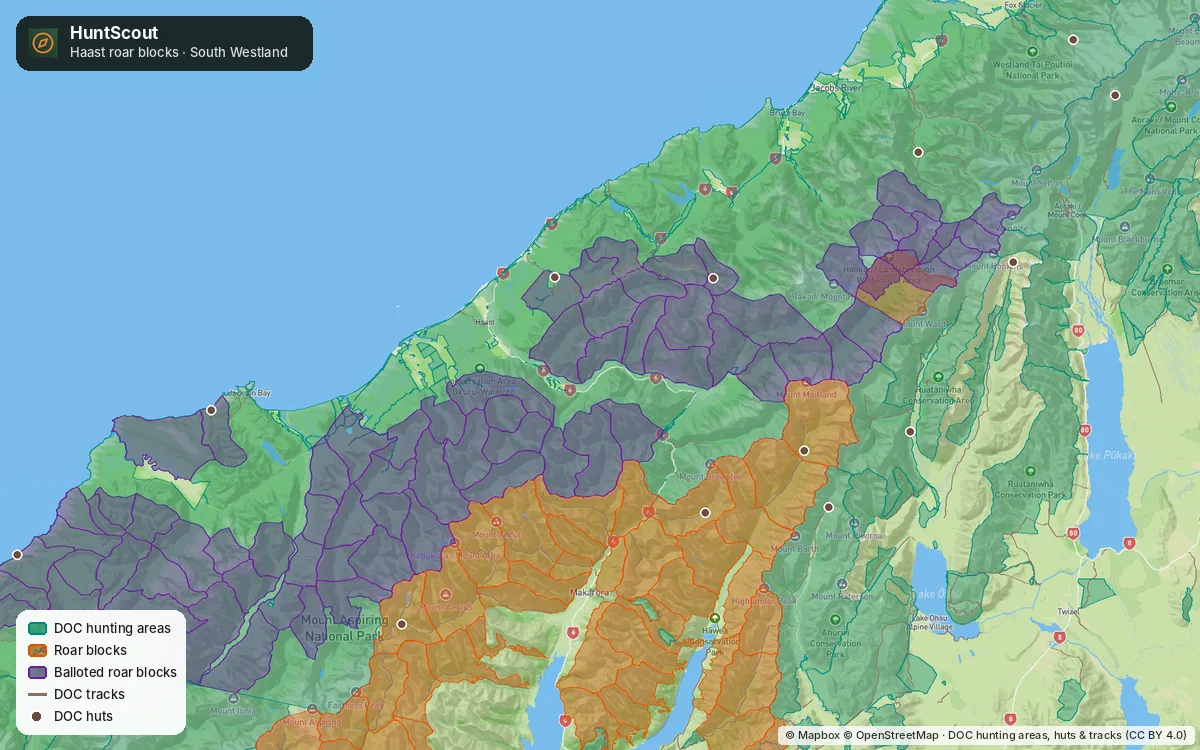 South Westland around Haast in HuntScout: roar blocks (orange), balloted roar blocks (purple), DOC huts and tracks.
HuntScout puts the first three on one offline map: DOC hunting areas with their status and conditions, roar and ballot blocks, huts, tracks, campsites, public conservation land and air access zones. Tap a block and it links to that block's DOC page. The NZ species distribution layers help with the fourth, as a rough guide. Pair them with good topographic maps (Topo50 detail) and local knowledge.
Before you go
- Get your DOC permit (and any ballot, block booking or dog permit).
- Hold a current firearms licence if you're shooting.
- Download offline maps for the whole area.
- Carry a PLB or satellite messenger and leave intentions with someone.
- Know DOC's standard rules: no hunting from 30 minutes after sunset to 30 minutes before sunrise, no shooting near huts, tracks or campsites, and none within 500 m of Great Walks huts and tracks (DOC rules).
Plan your NZ hunt in HuntScout
DOC blocks, roar ballots, huts and tracks on one map that works without reception.
Read next: DOC hunting permit and hunting areas map · Best hunting apps in Australia and NZ · HuntScout in Australia and New Zealand
Last checked: 15 October 2026, against DOC's hunting pages, what to hunt and deer pages, and the Hunters Notice 2026 for game birds. Rules, closures and ballot dates change. Always confirm with DOC, Fish & Game or the landowner before you hunt.
Frequently asked questions
Where can I hunt for free in New Zealand?
On open hunting areas of public conservation land, with a free DOC hunting permit. The permit lasts 12 months and is issued online. Restricted areas and roar blocks need a specific permit, booking or ballot win.
Where is the best public land deer hunting in the North Island?
Popular public land includes the Kaimanawa and Kaweka forest parks (the only sika deer in New Zealand), and the Ruahine and Tararua ranges for red deer. Te Urewera is also huge but has its own rules. Hunting in thick North Island bush is hard work, so expect to put in time.
Where can I hunt tahr and chamois in New Zealand?
Both are South Island alpine animals. Tahr are concentrated in the central Southern Alps, and chamois range more widely through the South Island high country. Check DOC's tahr page for current control operations and exclusion zones.
When is the roar in New Zealand?
The red deer roar runs roughly March to April, peaking from late March to mid-April. Some DOC areas run roar block ballots for this period, such as Haast, Wānaka and Molesworth.
Do I need a hunting licence in New Zealand?
There is no general big game hunting licence. You need a DOC permit for public conservation land, a firearms licence to use a firearm, and a Fish & Game licence for game birds. On private land you need the landowner's permission.